Table of Contents
Generic shopping experiences destroy conversion rates. Stores treating every visitor identically lose 15–30% of potential revenue to competitors running AI-driven personalization engines (McKinsey, 2024).
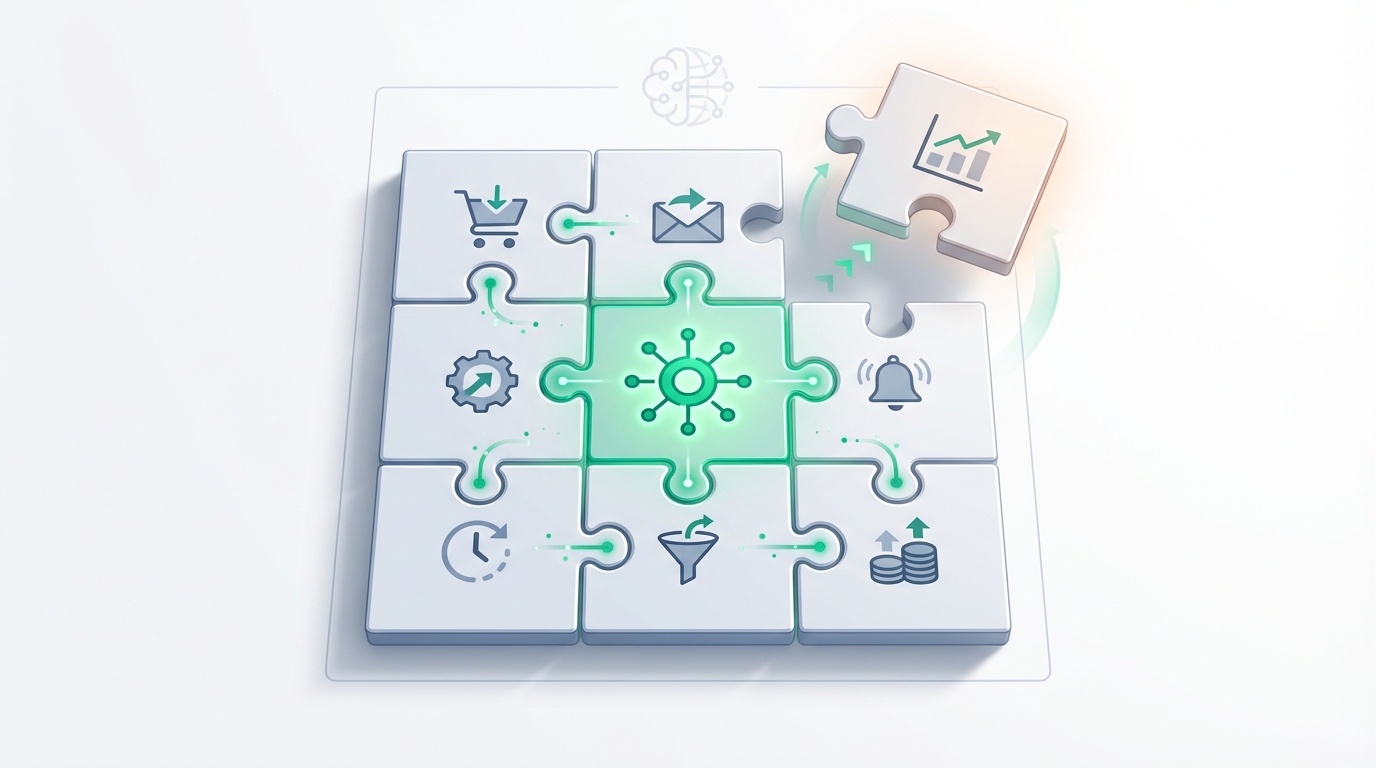
AI personalization for e-commerce eliminates this revenue leak. The right products, messages, and experiences reach each visitor based on 3 behavioral signals: browse history, purchase data, and session context.This guide builds AI-powered personalization that drives measurable revenue lift using intelligent recommendation engines and predictive analytics from our Growth Intelligence Platform.
Why AI Personalization Matters for E-Commerce
The Revenue Impact
The Data:- Personalized experiences deliver 5–15% revenue lift (McKinsey research)
- 80% of consumers purchase more frequently when brands offer personalized experiences (Epsilon)
- Personalization reduces acquisition costs by 50% (Adweek)
The Expectation Gap
Customers demand personalization across 3 benchmark platforms that set the standard for every online store.- Amazon's "customers who bought" algorithm drives 35% of its total revenue through recommendation-driven purchases
- Netflix personalizes content from the first screen, reducing churn by 8 percentage points annually
- Spotify generates custom playlists automatically, increasing daily active listening time by 31 minutes per user
Your store competes directly against these 3 benchmarks — regardless of category or price point.
Generic Experience Problems
Without personalization, stores suffer 4 measurable conversion failures:- New visitors see bestsellers misaligned with their actual interest category
- Repeat customers encounter the same static hero banner on every return visit
- Every subscriber receives identical email content regardless of purchase history
- Product recommendations default to popularity-based rankings rather than individual affinity scores
Types of AI Personalization for E-Commerce
1. AI Product Recommendations
AI product recommendations are the highest-ROI personalization layer, delivering 15–35% of total store revenue when placed across 5 key touchpoints (Shopify Partner Report). AI recommendation engines power 5 distinct recommendation types:- Similar items: "More like this" — surfaces products sharing 3+ matching attributes
- Complementary items: "Frequently bought together" — increases average order value by 12–18%
- Personalized picks: "Recommended for you" — driven by individual purchase and browse history
- Recently viewed: "Continue shopping" — recovers 7% of abandoning sessions
- Collaborative filtering: "Customers like you also bought" — leverages behavior from 1,000+ similar customer profiles
- Homepage
- Product pages
- Cart and checkout
- Email campaigns via Klaviyo or Omnisend
- Exit popups powered by Privy
- Post-purchase confirmation pages
2. Content Personalization
Content personalization increases on-site engagement by 28% by serving 4 types of dynamically adjusted experiences to each visitor. 4 content personalization implementations:- Hero banners rendered from previous browse behavior — fashion browsers see apparel, not electronics
- Category ordering ranked by individual preference signals accumulated over 3+ sessions
- Search results re-ranked by personal relevance score rather than global popularity
- Landing pages customized to traffic source — paid social visitors see social proof; email visitors see loyalty rewards
3. Communication Personalization
Communication personalization through Klaviyo, Omnisend, and Attentive increases email revenue per recipient by 41% (Klaviyo 2025 Email Benchmark Report). 5 communication personalization implementations:- Product recommendation blocks in email campaigns — Klaviyo's predictive product feeds update dynamically at open time
- Send-time optimization — Attentive identifies each subscriber's peak 2-hour engagement window
- Subject line personalization — inserting first name and last-browsed category lifts open rates by 26%
- Dynamic content blocks — Omnisend swaps content blocks based on 4 customer segments: new, active, at-risk, lapsed
- Offer personalization — discount depth adjusts to customer lifetime value tier
4. Experience Personalization
Experience personalization reduces friction across 5 distinct shopping contexts, increasing checkout completion rates by 19% (Shopify Partner Report). 5 experience personalization implementations:- Navigation customization — top-menu category order resequences based on 3 prior visit patterns
- Checkout flow optimization — returning customers skip 2 redundant form fields via pre-populated data
- Mobile-specific experience — product image count reduces from 8 to 3 on mobile to accelerate load time
- New vs. returning visitor flows — new visitors receive trust-building social proof; returning visitors see loyalty status
- VIP vs. standard experiences — Recharge and Yotpo loyalty data triggers VIP-tier pricing and early-access offers
5. Offer Personalization
Offer personalization increases promotional ROI by 34% by eliminating blanket discounting across 5 customer value tiers. 5 offer personalization implementations:- Discount depth scaled to customer lifetime value — top-20% customers receive exclusive access, not percentage discounts
- Free shipping thresholds calibrated to individual average order value — a $67 AOV customer sees a $75 threshold, not $100
- Bundle offers constructed from actual purchase history — Recharge subscription data triggers complementary product bundles
- Loyalty rewards customized by Yotpo point balance and redemption velocity
- Win-back offers personalized to last-purchased category and days-since-purchase count
Building Your Personalization System
The Personalization Stack
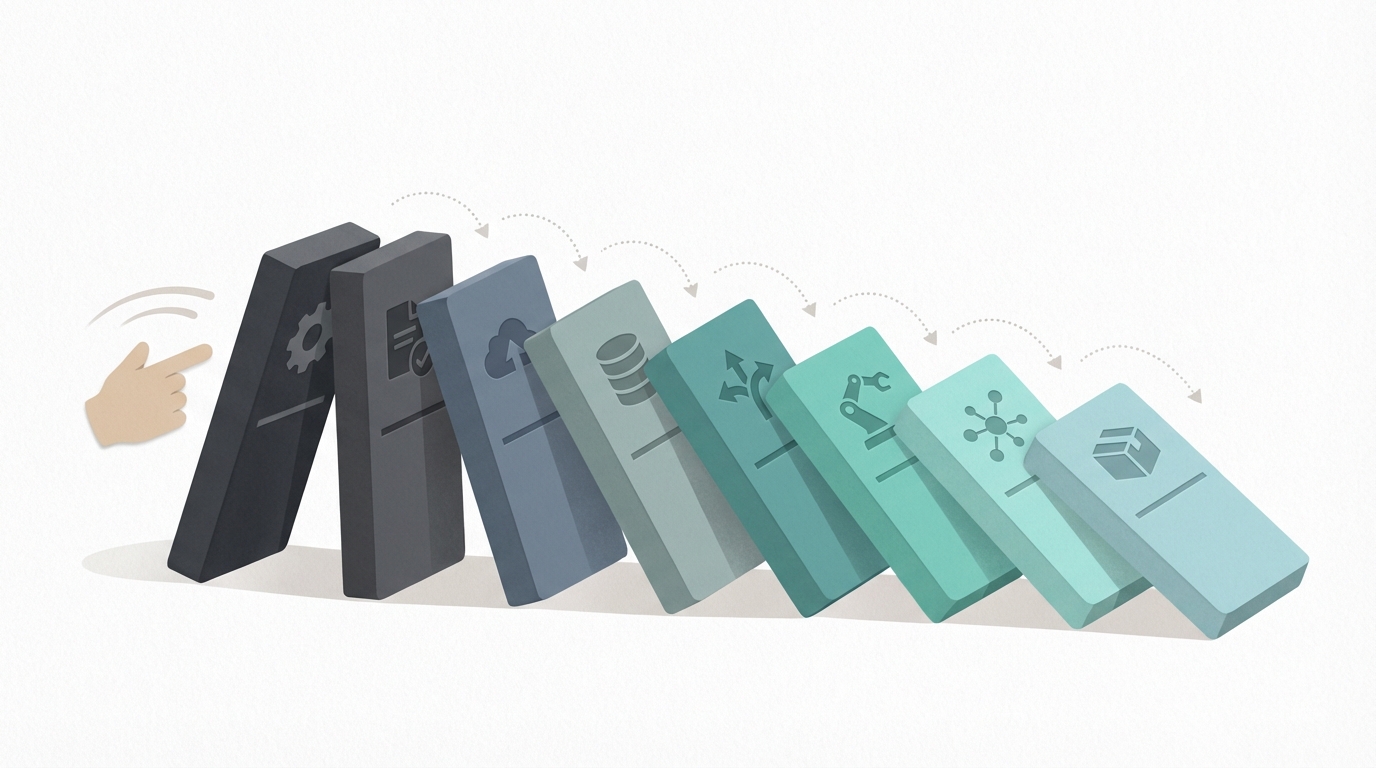
DATA LAYER
├── Customer Profiles
│   ├── Purchase history
│   ├── Browse behavior
│   └── Preferences
├── Product Data
│   ├── Attributes
│   ├── Categories
│   └── Relationships
└── Context Data
    ├── Device/location
    ├── Traffic source
    └── Session behavior
INTELLIGENCE LAYER
├── Segmentation
├── Recommendation Engine
├── Predictive Models
└── Decision Engine
EXECUTION LAYER
├── On-Site Experiences
├── Email/SMS
├── Paid Media
└── Customer Service
Phase 1: Foundation (Week 1-4)
4 foundational steps build the data and segmentation base every personalization system requires. Step 1: Data Audit Audit existing data across 4 required and optional sources:- Purchase history (required)
- Browse behavior (required)
- Customer profiles (helpful)
- Email engagement data from Klaviyo or Omnisend (helpful)
- New vs. returning visitors
- High-value vs. standard customers — defined by top-25% LTV threshold
- Category affinity — fashion, electronics, home, or beauty
- Engagement level — active (purchased in 90 days), cooling (91–180 days), lapsed (180+ days)
- Recently viewed product widgets on all product and cart pages
- "Customers also bought" recommendation blocks — increases AOV by 12%
- New vs. returning visitor homepage messaging — separate hero banners for each segment
Phase 2: Intelligent Recommendations (Week 5-8)
Step 4: Recommendation Engine Implement AI-powered product recommendations across 3 algorithm types:- Attribute-based similarity filtering for new product discovery
- Collaborative filtering — leverages behavioral data from 500+ similar customer profiles
- Personalized ranking — re-scores global bestseller lists by individual affinity
- Homepage — personalized picks for logged-in customers; trending for anonymous visitors
- Product pages — similar items and complementary product pairs
- Cart page — upsells priced within 20% of cart total; cross-sells under $30
- Search results — personalized ranking layer applied over keyword relevance scores
- 404 error pages — recovery recommendations based on last-browsed category
Phase 3: Advanced Personalization (Month 3+)
Step 6: Content Personalization Build 3 dynamic content systems that update without manual intervention:- Dynamic hero banners rotating across 4 customer segments
- Personalized category pages reordering based on 30-day browse signals
- Custom landing pages matched to 6 traffic source types
- Purchase prediction — identifies the next likely category within 14 days
- Churn prevention — flags customers with 60% drop in 30-day engagement
- Next best action — determines whether to serve a recommendation, offer, or loyalty prompt
- Optimal offer selection — selects discount depth that maximizes margin without over-incentivizing
Product Recommendation Strategies
Algorithm Types
Content-Based Filtering: Content-based filtering recommends products sharing 3+ matching attributes with items the customer already viewed or purchased.- Customer viewed blue midi dresses → engine surfaces 12 blue dress variants across 3 price tiers
- Advantage: Activates immediately for new products with zero purchase history
- Limitation: Reduces discovery — customers see only variations, not adjacent categories
- Customers matching your browse pattern bought Product X in 68% of sessions → engine recommends Product X
- Advantage: Drives discovery of non-obvious complementary products
- Limitation: Cold-start problem — requires minimum 200 customer profiles to generate reliable signals
- Content-based filtering activates for customers with fewer than 3 purchases
- Collaborative filtering layers in once the store accumulates 500+ behavioral profiles
- Rebuy and LimeSpot both implement this hybrid architecture by default
Recommendation Placement Best Practices
Homepage:- "Recommended for you" — renders for logged-in customers with 2+ prior purchases
- "Trending now" — activates for anonymous visitors using 48-hour session aggregate data
- "New arrivals in [favorite category]" — pulls from Yotpo purchase history tags
- "Complete the look" — fashion stores using Rebuy report 14% AOV lift from this block
- "Frequently bought together" — bundles with 3 items outperform 2-item bundles by 9%
- "Similar products" — supports comparison shopping and reduces bounce by 11%
- "Recently viewed" — navigation aid recovering 6% of exit-intent sessions
- "Don't forget" — consumables and accessories priced under $25 convert at 8% click-to-purchase
- "Customers also added" — cross-sell block increases cart value by $12 on average
- "Free shipping in $X" — threshold upsell converts 22% of eligible sessions when gap is under $15
- "Based on your purchase" — Klaviyo post-purchase email with recommendation block generates $4.20 revenue per send
- "Reorder" — consumables replenishment prompt sent at 28-day intervals via Postscript SMS
- "Upgrade to" — premium version offer triggered 14 days after standard-tier purchase
Measuring Personalization Success
Key Metrics
 Revenue Per Visitor (RPV):
RPV is the single most accurate measure of personalization ROI — it captures both conversion rate and order value in one metric.
Revenue Per Visitor (RPV):
RPV is the single most accurate measure of personalization ROI — it captures both conversion rate and order value in one metric.
RPV = Total Revenue / Total Visitors
Target: 5–15% CTR on recommendation widgets
Target: 2–5% of recommendation clicks → purchase
Target: 15–35% of total revenue
A/B Testing Personalization
A/B testing personalization requires 3 structural elements: a defined control, a single test variable, and minimum 2 weeks of runtime to reach statistical significance. Test Structure:- Control: Generic bestseller-ranked experience
- Test: AI-personalized experience via Rebuy, LimeSpot, or Nosto
- Measure: Revenue per visitor, conversion rate, and 30-day repeat purchase rate
- Personalized recommendations vs. bestseller-ranked recommendations on product pages
- Dynamic hero banners vs. static hero banners — measure bounce rate and time-on-page
- Personalized vs. segment-level email content — measure revenue per send via Klaviyo attribution
- Recommendation widget placement — above-the-fold vs. below-the-fold on product pages
Technology Options
For Growing Stores
3 Shopify apps deliver immediate personalization ROI for stores under $2M annual revenue:- LimeSpot: AI recommendation engine with 6 placement types — starts at $18/month
- Rebuy: Full personalization engine with smart cart, post-purchase, and email sync — starts at $99/month
- Wiser: Smart product recommendations with Klaviyo integration — starts at $49/month
For Mid-Market
Nosto: Nosto delivers a full 6-layer personalization suite — onsite recommendations, segmentation, content personalization, pop-ups, email product feeds, and A/B testing — purpose-built for mid-market stores generating $2M–$50M annually. Dynamic Yield: Dynamic Yield operates as an enterprise-grade personalization decisioning layer, integrating with Shopify, WooCommerce, Salesforce, and custom stacks to serve real-time personalization across web, app, and email.For Enterprise
Salesforce Commerce Cloud: Salesforce Commerce Cloud's Einstein AI engine personalizes 8 experience layers — search ranking, product recommendations, sort order, promotions, content, email, push notifications, and next-best-action decisioning. Adobe Target: Adobe Target delivers advanced personalization and multivariate testing with server-side rendering support — eliminating the 200ms client-side flicker that reduces recommendation CTR by 14%. Custom Solutions: Custom recommendation architectures built on Recombee or AWS Personalize reduce platform licensing costs by 40% for stores with dedicated engineering teams and 500K+ monthly sessions.Evaluation Criteria
Select a personalization platform against 6 non-negotiable criteria:- Native integration with Shopify or WooCommerce — no custom middleware required
- Recommendation algorithm quality — hybrid content-based plus collaborative filtering minimum
- Implementation timeline — 14 days or fewer to first live recommendation
- Built-in A/B testing with revenue-per-visitor as the primary metric
- Reporting granularity — recommendation-level revenue attribution, not just widget CTR
- Cost-to-revenue ratio — platform fee under 15% of incremental recommendation revenue
Common Personalization Mistakes
Mistake 1: Creepy Personalization
Creepy personalization destroys trust in a single session and increases unsubscribe rates by 34% (Klaviyo 2025 Email Benchmark Report). 3 examples of invasive personalization that erode brand trust:- "We noticed you viewed this item at 2am" — explicit timestamp references feel surveillance-based
- Retargeting ads appearing across 12+ platforms within 30 minutes of a single browse session
- Subject lines referencing specific personal data — "Still thinking about those red heels, [First Name]?"
Mistake 2: Over-Personalization
Over-personalization narrows the recommendation pool to fewer than 15 products, causing customers to stop discovering new items and reducing catalogue engagement by 28%. The failure pattern: Customer purchases running shoes once → recommendation engine serves only running products for 180 days → customer buys cross-training gear from a competitor. Solution: Balance personalization with discovery by dedicating 30% of recommendation slots to popular or new arrivals outside the customer's established category history.Mistake 3: Poor Data Quality
Poor data quality corrupts recommendation outputs — incorrect purchase attribution produces wrong collaborative filtering clusters, duplicate profiles split behavioral signals, and outdated preference data surfaces irrelevant categories. 3 data quality failures that degrade recommendation accuracy:- Duplicate customer profiles — Klaviyo and Yotpo each maintain separate identity graphs that require quarterly reconciliation
- Incorrect purchase attribution — returns not processed in the data layer inflate category affinity scores
- Stale preference data — browse signals older than 90 days actively reduce recommendation relevance
Mistake 4: Ignoring Anonymous Visitors
Anonymous visitors represent 75% of total store traffic — personalization systems that require login exclude the majority of potential buyers from receiving relevant experiences. Session-based personalization activates for anonymous visitors using 3 real-time signals:- Browse behavior accumulated in the current session — category clicks, product views, scroll depth
- Traffic source context — paid social visitors see social proof; organic search visitors see comparison content
- Device and geographic signals — mobile visitors in cold climates see outerwear; desktop visitors see full catalogue
Mistake 5: Set and Forget
Recommendation algorithms degrade by 18% in accuracy over 6 months without active optimization — product catalogues change, customer behavior shifts, and seasonal patterns override historical affinity scores. Implement a 4-step continuous optimization program:- Monthly A/B tests on recommendation widget placement and algorithm type
- Quarterly catalogue refresh — suppress out-of-stock items and re-weight new arrivals
- Seasonal model retraining — update collaborative filtering clusters before Q4 and major sale events
- Annual platform audit — benchmark current tool performance against 3 alternatives
Privacy and Personalization
Transparency Best Practices
Transparent personalization increases opt-in rates by 31% — customers who understand data use convert at 2.4x the rate of customers shown no explanation (Shopify Partner Report). 4 transparency practices that increase consent rates:- Clear, plain-language privacy policy — one page, under 500 words, no legal jargon
- Cookie consent with granular controls — separate toggles for analytics, personalization, and marketing
- Preference management center — customers update category interests and communication frequency
- Simple data-use explanation at account creation — "We use your browse history to show relevant products"
- Collecting behavioral data beyond the 3 signals required for personalization — session, purchase, preference
- Sharing customer profiles with third-party data brokers without explicit consent
- Building personalization systems that expose surveillance-like data specificity
- Ignoring GDPR or CCPA opt-out requests within the required 30-day response window
Regulatory Considerations
GDPR (Europe):- Explicit consent — required before activating cross-session personalization for EU visitors
- Right to opt out — must process within 30 days of request
- Data access and deletion — fulfillment required within 72 hours for deletion requests
- Notice of data collection — disclosed before or at the point of data collection
- Opt-out rights — "Do Not Sell My Personal Information" link required on every page
- Non-discrimination — opt-out customers receive identical pricing and product access
- Session-based personalization activates without consent — uses only current-session signals, no persistent identifiers
- Cross-session enhanced personalization requires explicit opt-in — stored profiles, purchase history, email behavior
- Opt-out mechanism — accessible from every page footer, processed within 72 hours
Implementation Roadmap
Quick Wins (Week 1-2)
- Add "Recently Viewed" widget to all product and cart pages
- Implement "Customers Also Bought" recommendation block on product pages
- Personalize email product recommendations via Klaviyo dynamic product feeds
Foundation (Month 1)
- Install personalization platform — Rebuy, LimeSpot, or Nosto based on revenue tier
- Configure 4 basic customer segments — new, returning, high-value, lapsed
- Deploy homepage recommendation blocks with new vs. returning visitor logic
- Activate cart page cross-sell blocks targeting sub-$25 complementary products
Optimization (Month 2-3)
- A/B test personalized vs. bestseller recommendation algorithms on product pages
- Implement dynamic hero banners across 4 customer segments
- Personalize category page product ordering by 30-day browse affinity
- Activate Klaviyo send-time optimization across all automated flows
Advanced (Month 4+)
- Implement predictive purchase and churn models via Klaviyo predictive analytics
- Build 6 segment-specific on-site experiences — new, returning, VIP, at-risk, lapsed, anonymous
- Activate offer personalization — discount depth and free shipping thresholds by LTV tier
- Launch continuous optimization program — monthly A/B tests, quarterly model retraining
Ready to Implement AI Personalization?
Personalization generates 40% more revenue per customer than generic experiences — and the gap widens by 8 percentage points annually as customer expectations compound (Gartner's personalization research).Stores running AI personalization today build a compounding data advantage — every additional session, purchase, and preference signal improves recommendation accuracy for every future visitor.
Smart Circuit's Growth Intelligence Platform implements AI-powered personalization across product recommendations, dynamic content, predictive analytics, and offer optimization — delivering measurable revenue lift within 30 days of deployment.
Book Your Personalization Assessment → A dedicated Growth Intelligence analyst audits your current experience, identifies your top 5 personalization opportunities, and models the revenue impact — specific to your store's traffic volume, AOV, and catalogue size.