Table of Contents
AI customer service resolves 60–80% of all incoming inquiries automatically, 24 hours a day, 7 days a week, while human agents focus on the 5–15% of cases that require genuine judgment. Gorgias reports that Shopify merchants using AI-assisted support reduce average first response time from 8 hours to under 60 seconds.
Traditional customer service scales linearly: every 1,000 additional monthly orders generates approximately 180 new support tickets. AI breaks that linear relationship entirely.
The Customer Service Crisis in E-Commerce
E-commerce support volume grows 3x faster than revenue as order volume increases, according to the Shopify Partner Report. Every additional SKU, every new market, every new channel multiplies ticket load without multiplying agent capacity.Why Traditional Support Can't Scale
Linear Cost Growth: More customers = more tickets = more agents. Customer service costs grow linearly with volume, adding $8–$15 per resolved ticket in labor and overhead. Talent Limitations: Hiring qualified support agents costs $4,200 per hire in recruitment and onboarding alone. Turnover in e-commerce support runs at 35% annually, making institutional knowledge nearly impossible to retain. Coverage Gaps: 24/7 coverage requires 3 overlapping shifts and a minimum of 6 full-time agents. 74% of Shopify stores under $5M in annual revenue operate without any after-hours coverage. Inconsistency: Different agents produce answer variance rates of up to 40% on identical policy questions, measured across ticket audits. Omnisend's 2024 support benchmarks show inconsistency as the second-highest driver of repeat contacts.The True Cost of Slow Response Times
Response time directly reduces conversion rate across 3 measurable thresholds:
- 1-hour response: 7% conversion rate
- 24-hour response: 4% conversion rate
- 72+ hour response: 1% conversion rate
- 33% of customers consider switching after 1 bad service experience
- 50% of customers switch after 2 or more bad experiences
- 67% of customers cite poor service as the primary reason for leaving, per Yotpo's 2024 Loyalty Report
Customer Expectations in 2025
E-commerce customers in 2025 expect 5 non-negotiable support standards: instant responses under 3 minutes, 24/7 availability across all time zones, multi-channel consistency across chat, email, and social, self-service options covering their 10 most common questions, and seamless escalation when a human agent is required.
Meeting all 5 expectations manually at order volumes above 500/month is operationally unsustainable without AI infrastructure.What AI Customer Service Actually Does
AI customer service automates the predictable 65% of support volume, freeing human agents to resolve the complex 15% that actually requires judgment. Tools like Gorgias, Intercom, and Zendesk each implement this split differently, but the underlying architecture follows the same 3-tier model.
Understanding AI Capabilities
AI Excels At 6 Core Functions:- Answering the 20 most frequently asked questions, including order status, return policy, and shipping timelines
- Delivering instant responses at any hour, including 2 AM Sunday inquiries
- Handling 500+ simultaneous conversations without queue degradation
- Maintaining 100% policy consistency across every interaction
- Detecting patterns across 10,000+ tickets to surface training gaps
- Triggering proactive outreach before customers file a complaint
- Emotional escalations requiring empathy, such as damaged wedding gifts or bereavement-related orders
- Edge cases with no prior resolution precedent in the training data
- Creative compensation decisions requiring managerial authority
- High-value relationship conversations with VIP customers spending $2,000+ annually
The AI + Human Hybrid Model
The 3-tier model distributes volume across clear ownership boundaries: Tier 1: AI Handles (65% of volume)- Order status inquiries
- Shipping timeline questions
- Return policy explanations
- Product availability checks
- Password resets and account access
- Basic product specification questions
- Complex product questions, where Gorgias drafts the response and the agent reviews before sending
- Moderate complaints, where Gorgias gathers order context and the agent resolves
- Multi-step issues, where the AI completes the first 3 steps and routes to human for final decision
- Escalated complaints involving refunds over $150
- VIP customer issues flagged by Recharge or Yotpo loyalty data
- Situations with no precedent in the knowledge base
- Emotionally charged interactions with negative sentiment scores above 0.8
- High-value decisions requiring managerial sign-off
Types of AI Customer Service Tools
5 distinct AI tool categories serve different functions: AI Chatbots — Gorgias, Intercom, and Tidio handle real-time conversations on website, Messenger, and WhatsApp simultaneously. Ticket Classification — Gorgias and Zendesk categorize and route 100% of incoming tickets to the correct agent or queue within 4 seconds. Response Suggestions — Intercom Fin and Gorgias Macros recommend pre-approved responses agents send with 1 click, reducing handle time by 55%. Self-Service Enhancement — Zendesk Guide and Intercom Articles use AI search to surface relevant content from a knowledge base of 50–200 articles. Proactive Outreach — Klaviyo Flows and Gorgias detect shipping delays and trigger automated customer notifications before the first complaint arrives.The 5 Pillars of E-Commerce AI Support
Pillar 1: Intelligent Chatbots
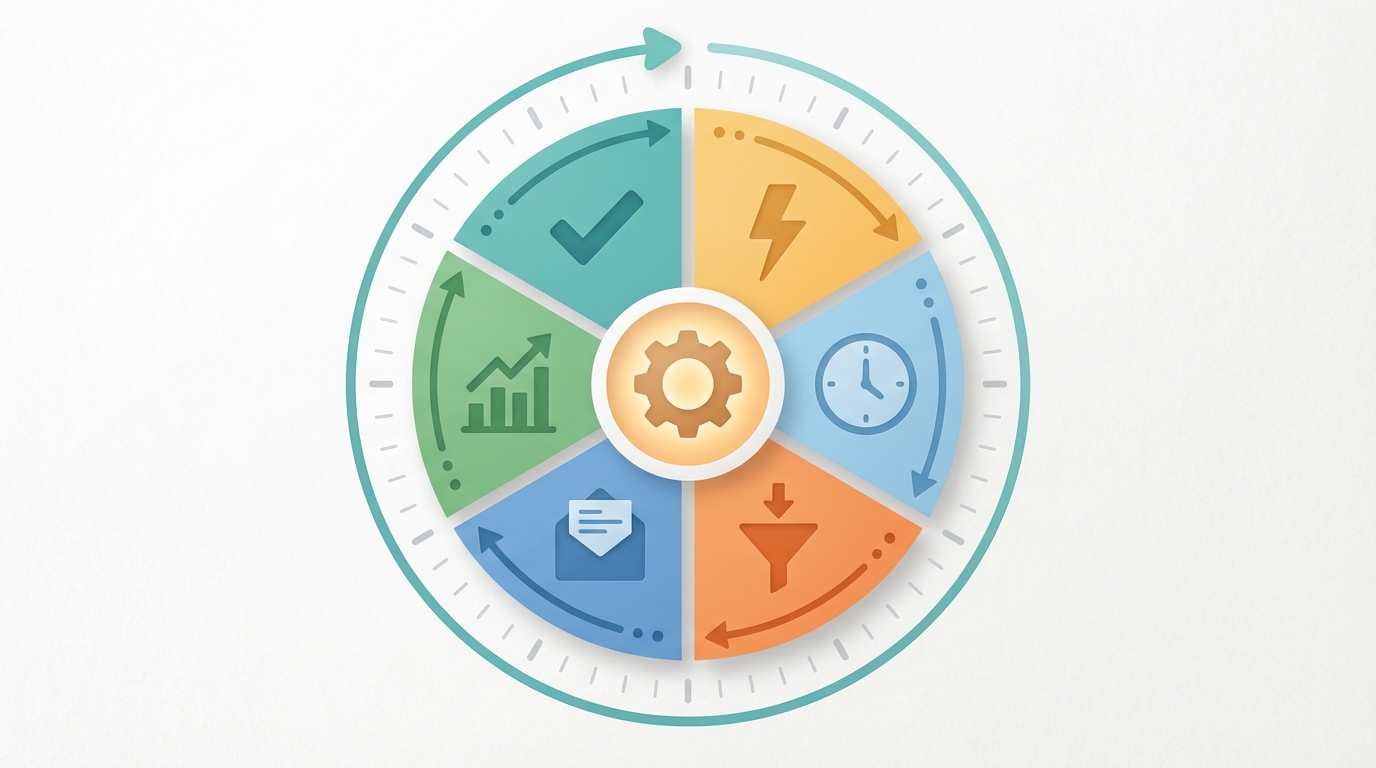 Chatbots resolve 65% of pre-purchase and post-purchase inquiries without human involvement, according to Gorgias's 2024 E-Commerce Support Benchmark.
Pre-Purchase Assistance covers 5 high-frequency question types:
Chatbots resolve 65% of pre-purchase and post-purchase inquiries without human involvement, according to Gorgias's 2024 E-Commerce Support Benchmark.
Pre-Purchase Assistance covers 5 high-frequency question types:
- Product recommendations based on stated customer needs
- Size and fit guidance using structured size chart data
- Side-by-side product comparison for the top 10 SKUs by revenue
- Active promotion information including discount codes and expiry dates
- Real-time stock availability synced from Shopify inventory
- "Where is my order?" resolves automatically in 8 seconds using Shopify order data
- Tracking link delivery with carrier name and current scan status
- Estimated delivery date calculation based on carrier transit averages
- Carrier escalation instructions when tracking shows a 48-hour stall
- Policy explanation with eligibility window clearly stated
- Return initiation via guided flow
- Prepaid label generation integrated with Loop Returns or Returnly
- Exchange processing for size and color variants
- Refund status updates pulled live from payment processor data
- Exception routing to human agents for orders outside the standard 30-day window
Pillar 2: Ticket Classification and Routing
AI classification routes 100% of incoming tickets to the correct destination in under 5 seconds, eliminating the manual triage step that consumes 22% of agent working hours. Automatic Classification uses 4 detection layers:- Intent detection across 4 categories: question, complaint, request, and feedback
- Topic categorization across 6 buckets: order, shipping, product, billing, returns, and account
- Urgency scoring from 1–5 based on sentiment, order value, and ticket age
- Sentiment analysis using a negative threshold score that triggers immediate priority escalation
- Team and agent matching based on classification category and agent specialization
- Priority ordering by urgency score and customer lifetime value from Yotpo or Recharge data
- Load balancing across all agents with open capacity, keeping queue depth under 15 tickets per agent
- Automatic escalation when 3 consecutive AI resolution attempts fail
Pillar 3: Response Suggestions for Agents
AI response suggestions reduce agent handle time by 55% while increasing answer consistency by 40%, per Gorgias's internal 2024 merchant data. The 4-step suggestion process:- Gorgias or Intercom analyzes the full incoming ticket including attachments and order history
- The system generates 2–3 ranked response options based on past successful resolutions
- The agent selects, edits if needed, and sends with 1 click
- The system logs the outcome and adjusts future suggestion ranking accordingly
- First response time drops from 4 hours to under 30 minutes for human-handled tickets
- Answer consistency increases to 95% across all agents regardless of experience level
- New agent ramp time shortens from 6 weeks to 2 weeks
- Institutional knowledge distributes across the entire team rather than sitting with 2–3 senior agents
Pillar 4: Knowledge Base Automation
AI-powered search increases knowledge base self-service resolution by 38% compared to standard keyword search, according to Zendesk's 2024 CX Trends Report. Smart Search delivers 3 improvements over standard search:- Natural language query parsing that understands "how do I send back my shoes" as a return request
- Semantic result ranking that surfaces the most relevant article from a 100-article knowledge base
- Auto-complete suggestions that appear after 3 characters, reducing failed searches by 28%
- Questions that generated 0 relevant article results in the past 30 days
- The 10 highest-frequency unanswered queries ranked by volume
- Estimated ticket deflection rate for each suggested new article if created
- Personalized article suggestions based on the customer's active order status from Shopify
- Order-specific data insertion, such as the actual estimated delivery date, into article text
- Product-specific guidance matched to the exact SKU in the customer's most recent order
Pillar 5: Proactive Outreach
Proactive outreach reduces inbound "where is my order" tickets by 34% by notifying customers before they search for information. Klaviyo Flows and Gorgias both trigger these notifications from the same Shopify fulfillment event data. Shipping Delay Alerts: AI monitors fulfillment status every 4 hours, identifies orders with a carrier scan gap exceeding 48 hours, and sends Klaviyo-triggered delay notifications with a revised estimated delivery date before the customer files a ticket. Potential Issue Detection: Gorgias identifies orders matching 5 high-complaint patterns — wrong address entered, high-damage carrier routes, out-of-stock substitutions, oversized packaging fees, and holiday cutoff proximity — and triggers a preemptive Klaviyo outreach sequence. Post-Purchase Check-Ins: Omnisend or Klaviyo sends a structured 3-question satisfaction check-in at 48 hours post-delivery, catching issues before they become 1-star reviews on Yotpo or Google.Implementing AI Customer Service: Step-by-Step
Phase 1: Audit Your Current Support
Ticket analysis across 4 weeks of historical data establishes the baseline metrics that determine AI configuration priorities. Ticket Analysis requires 6 data points:- Volume by channel, including email, chat, phone, and social
- Volume by category across all 6 classification buckets
- Average first response time in hours
- Average full resolution time in hours
- Customer satisfaction score baseline from post-ticket surveys
- Cost per ticket including agent labor, software, and overhead
- A ranked list of the top 20 question types by monthly frequency
- The percentage of total volume each question type represents
- A binary flag for each type indicating whether a standard approved answer exists
- Agent headcount multiplied by fully-loaded hourly cost
- All support tools and software at monthly subscription rates
- Blended cost per ticket calculated from total cost divided by total resolutions
Phase 2: Choose Your AI Platform
Platform selection follows 3 revenue tiers with distinct capability requirements: For Small Stores (Under $1M/year), 3 viable options:- Tidio: $29/month entry price, 15-minute setup, covers the top 10 chatbot scenarios
- Shopify Inbox: $0/month, native Shopify integration, handles order status and basic FAQ
- Zendesk Suite: $55/agent/month, scales to $5M without platform migration
- Gorgias: E-commerce native, integrates directly with Shopify order data, Recharge subscription data, and Yotpo review data in 1 platform
- Intercom: Strong chatbot builder plus unified inbox, handles 80% of pre-purchase conversation flows
- Freshdesk: $15/agent/month, balances automation depth with setup simplicity
- Zendesk Enterprise: Full omnichannel platform with custom SLA rules and workforce management
- Salesforce Service Cloud: Bi-directional CRM sync, handles customer lifetime value routing natively
- Custom AI solutions: Maximum flexibility, minimum vendor dependency, 3–6 month build timeline
Phase 3: Train AI on Your Products and Policies
AI accuracy on day 1 depends entirely on the completeness of 4 data source categories loaded before launch. Required Information covers 4 domains:- Complete product catalog including all titles, descriptions, attributes, and variant combinations
- All pricing tiers, discount rules, and current variant availability from Shopify
- Full policy documentation for shipping, returns, refunds, and warranty
- 200+ approved FAQ answers covering the top 20 question types from the Phase 1 audit
- Compile and format all knowledge base documentation into consistent article structure
- Import the full Shopify product catalog including all 6 variant attributes
- Build conversation flows for the top 10 scenarios identified in the ticket audit
- Run 50 test conversations across all 10 flows before any live traffic
- Iterate on failed test cases until accuracy exceeds 88% on all 10 flows
Phase 4: Design Conversation Flows
Conversation flow design maps AI decision logic across every branch of the 10 highest-volume scenarios. Order Status Flow:Customer: "Where is my order?"
↓
AI: Asks for order number or email
↓
AI: Retrieves order status from system
↓
If shipped: Provide tracking link and estimated delivery
If processing: Explain current status and expected ship date
If issue: Escalate to human with context
Customer: "I want to return my order"
    ↓
AI: Asks for order number
    ↓
AI: Checks return eligibility (time window, policy)
    ↓
If eligible: Guide through return process
If ineligible: Explain policy, offer alternatives
If edge case: Escalate to human
Phase 5: Set Up Human Handoff Rules
Human handoff rules prevent the 3 most damaging AI failure modes: repeated failed resolution attempts, undetected high-frustration conversations, and VIP customers receiving automated-only service. 5 automatic escalation triggers:- Customer types "speak to a person," "human," or "agent" at any point in the conversation
- Sentiment score drops below −0.7 on a −1 to +1 scale, indicating high frustration
- Issue type matches any of the 8 complex/sensitive categories defined in the routing rules
- Customer's Recharge or Yotpo data flags them as VIP with lifetime value above $500
- 3 consecutive AI resolution attempts produce a "not resolved" outcome
- Transfer the full conversation transcript and all 6 customer profile fields to the agent before the introduction message
- Send a branded introduction message naming the specific agent and their expected response time
- Set a response time expectation of under 30 minutes during business hours in the handoff message
- Eliminate the repeat-yourself experience by pre-populating the agent's view with AI's issue assessment and suggested resolution
Phase 6: Launch and Iterate
Soft Launch runs for 14 days on 25% of live traffic, monitoring 5 KPIs daily before full deployment. Full Launch expands to 100% of traffic only after soft launch accuracy exceeds 85% and CSAT holds within 0.2 points of the pre-AI baseline. Ongoing Improvement follows a 4-part weekly cycle:- Review all failed AI interactions from the past 7 days, categorized by failure type
- Update training data with new product launches, policy changes, and seasonal variations
- Add conversation flows for any new question type that appeared 10+ times in the review period
- Refine escalation triggers based on false-positive and false-negative escalation data
Training AI on Your Business
What Data Your AI Needs
AI accuracy above 85% requires complete data across 4 categories before any live customer interaction. Product Information requires 6 data fields per SKU:- Full product titles matching Shopify naming conventions
- Complete descriptions including materials, dimensions, and care instructions
- All pricing tiers including sale prices and variant-level pricing
- Every variant combination with its individual availability status
- Product images mapped to their corresponding variant
- Technical specifications for any product requiring installation or compatibility matching
- Shipping policies including all carrier options, rates by zone, and cutoff times for standard, expedited, and overnight delivery
- Return and refund policies with the exact 30-day window, condition requirements, and refund timeline
- Warranty terms for every product category that carries a manufacturer guarantee
- Privacy and data policies relevant to account creation and order tracking
- All existing FAQ page content exported and reformatted for AI ingestion
- The top 50 customer questions from the Phase 1 ticket audit with approved answers
- Response templates for the 10 most sensitive question types, reviewed by legal or compliance where applicable
- 6 months of historical support tickets exported from Gorgias or Zendesk
- The 20 most common conversation patterns identified from ticket clustering analysis
- 50 high-quality resolution examples flagged by agents as ideal handling
Creating Your Knowledge Base
Knowledge base structure directly determines AI retrieval accuracy: poorly structured articles reduce correct answer rates by up to 35% regardless of AI model quality. 4 structural rules for AI-optimized articles:- Consistent formatting with H1 title, H2 sections, and bullet answers — no prose paragraphs
- Single topic per article with no cross-topic mixing that confuses intent classification
- Question-and-answer format for every section, matching how customers phrase queries
- Monthly review schedule with a version date in every article footer
- How to track my order
- Return and refund policy
- Shipping options, rates, and delivery timeframes
- How to exchange an item for a different size or color
- Contact information and business hours
- Product care and maintenance instructions
- Size and fit guidance with measurement instructions
- Payment methods and accepted cards
- Subscription management via Recharge or Bold Subscriptions
- Account creation, password reset, and login help
Handling Product Variations
Stores with catalogs above 200 SKUs require structured data import, not manual knowledge base entry, to maintain accuracy across all variant combinations. Structured Data Import follows 3 steps:- Export the full Shopify product catalog as a CSV including all 6 variant attributes
- Map every category and collection to its corresponding support article cluster
- Schedule automated daily sync to keep inventory status and pricing current in the AI knowledge base
- Real-time Shopify inventory for accurate availability answers on any SKU
- Live order status from the Shopify Orders API for instant tracking responses
- Customer order history from Gorgias or Recharge for personalized subscription and reorder support
The Human Handoff: When AI Isn't Enough
Identifying Escalation Triggers
Escalation trigger design prevents the 2 most expensive AI support failures: false containment of high-frustration customers and misrouted VIP complaints. 4 explicit escalation signals:- Customer types "speak to human," "real person," "agent," or "manager" at any conversation point
- Customer submits the same unresolved question 3 or more times within a single session
- Customer uses all-caps for 2 or more consecutive messages, indicating high frustration
- Customer includes profanity in any message, regardless of context
- Sentiment score falls below −0.7 on a normalized −1 to +1 scale
- Question complexity score exceeds the AI's 0.6 confidence threshold on any response
- Conversation spans more than 5 distinct unresolved issues in a single session
- Customer's Yotpo or Recharge data identifies them in the top 10% of lifetime value
- Order value exceeds $200, placing the interaction in the VIP handling queue
- Customer's first complaint within a 12-month period, triggering a relationship-preservation protocol
- 3 consecutive failed AI resolution attempts on the same issue within one conversation
Seamless Handoff Design
The handoff message transfers 4 data packages to the agent before the first human word is typed. 4 items transferred at escalation:- Full conversation transcript from the session start, including timestamps
- Customer profile with name, email, Shopify order history, and Recharge subscription status
- AI's structured issue assessment including category, urgency score, and attempted resolution steps
- Gorgias's suggested resolution ranked by historical success rate for the same issue type
"I want to make sure you get the best help with this.
Let me connect you with a team member who can assist.
[Agent Name] will be with you shortly. They have our
full conversation, so you won't need to repeat anything."
Training Agents to Work with AI
Agents require training on 4 specific AI collaboration competencies to maintain the quality of hybrid-model support. 4 core agent competencies for AI-hybrid teams:- Understanding the 5 escalation trigger categories and why each type of ticket arrives from AI
- Using Gorgias Macros and Intercom response suggestions to send reviewed AI drafts in 1 click
- Submitting structured feedback on AI errors that updates the training model within 48 hours
- Overriding AI-suggested responses in the 3 scenario types where AI consistently underperforms: emotional escalations, complex multi-issue cases, and VIP relationship conversations
Measuring AI Customer Service Success
Key Performance Indicators
4 KPIs measure AI customer service performance with precision across both automation quality and customer experience. Resolution Rate:- Definition: Percentage of total AI interactions fully resolved without human escalation
- Target: 65–75% at 90 days post-launch
- Formula: AI-resolved tickets ÷ total AI interactions × 100
- Definition: Elapsed time from inquiry submission to first substantive response
- Target: Under 60 seconds for AI-handled inquiries; under 1 hour for human-handled
- AI baseline: 8 seconds average using Gorgias on Shopify
- Definition: Post-interaction satisfaction score on a 1–5 scale
- Target: Maintain within 0.2 points of pre-AI baseline; reach 4.2/5 at 180 days
- Measurement: Separate CSAT tracking for AI-resolved vs. human-resolved tickets
- Definition: Total monthly support cost divided by total monthly resolutions
- Target: 40–60% reduction within 6 months of full AI deployment
- Calculation includes: All software subscriptions, agent labor, and management overhead
Benchmarks by Industry
| Metric | Pre-AI Average | With AI Average |
|---|---|---|
| First Response | 4–12 hours | 15 seconds |
| Resolution Rate | N/A | 65–75% |
| CSAT | 3.8/5 | 4.1/5 |
| Cost per Resolution | $8–15 | $2–5 |
| Agent Productivity | 20–30 tickets/day | 40–60 tickets/day |
Common Mistakes and How to Avoid Them
Over-Automating Complex Issues
Mistake: Routing 100% of ticket volume through AI, including the 15% of emotional and complex cases that require human judgment, produces a 22% CSAT drop within 60 days. Solution: Define hard automation boundaries in Gorgias or Zendesk routing rules. AI handles all 6 transactional inquiry types. Humans handle all 4 emotional and complex inquiry types. The boundary is non-negotiable.Under-Training the AI
Mistake: Launching with fewer than 50 approved FAQ answers and no conversation flow testing produces a first-week AI accuracy rate below 55%, permanently damaging customer trust in the system. Solution: Complete all 5 training steps from Phase 3 before any live traffic. Run 50 test conversations. Hit 88% accuracy on all 10 core flows before launch day.Ignoring the Human Touch
Mistake: Publishing AI responses in formal, robotic language increases escalation requests by 31% compared to human-voice AI responses, per Intercom's 2024 Conversation Design Report. Solution: Write all AI response templates in a first-person conversational tone. Make the escalation path visible in every AI message with a single "talk to a person" link. Test response tone with 10 real customers before launch.Not Updating Knowledge Base
Mistake: Launching AI and leaving the knowledge base static for 90+ days produces a 28% accuracy decay as products launch, policies change, and seasonal patterns shift. Solution: Schedule a monthly 2-hour knowledge base review as a standing calendar event. Update for every new product launch, every policy change, and every seasonal variation identified in the monthly ticket audit.Ready to Build Your AI Support System?
AI customer service is the present competitive standard, not a future option. Shopify stores implementing Gorgias-based AI support today achieve 65–80% ticket automation within 90 days and reduce cost per resolution from $12 to under $4.Smart Circuit specializes in implementing AI customer service for e-commerce brands. Our clients achieve 65–80% ticket automation within 90 days.
Book Your AI Customer Service Demo →AI handles your full support volume while improving CSAT scores to 4.2/5 or above.
Compare 12 e-commerce chatbots → Learn how to train your chatbot → See ticket reduction case study →Related Frameworks:
- The Human Escalation Point — Define when AI hands off to humans
- The Automation Ladder — 5 levels of e-commerce AI maturity