Returns define e-commerce profitability. Easy returns drive repeat purchases from 92% of customers, while 67% check the return policy before placing their first order.
The numbers:
Average e-commerce return rate: 20–30%
Apparel return rate: 30–40%
Cost per return: $15–30 (processing, shipping, restocking)
92% of customers buy again when returns are frictionless (Shopify Partner Report)
67% of shoppers review the return policy before purchasing
The opportunity: Returns automation converts a $17–51 per-return cost center into a measurable competitive advantage.
The True Cost of Returns
Breaking Down Return Costs
Returns cost Shopify and WooCommerce stores between $17 and $51 per transaction when all 6 cost components are included.
Cost Component
Typical Amount
Return shipping
$5–12
Processing labor
$3–8
Restocking/inspection
$2–5
Customer service
$2–6
Write-offs (unsellable)
$5–20
Total per return
$17–51
Hidden Costs
4 frequently uncounted cost categories inflate the true return loss beyond the $17–51 baseline:
Tied-up inventory remains unsellable for an average of 7 days during transit
Fraud losses reach 2–5% of total return volume in unmonitored stores
Customer service overhead adds 12 minutes of agent time per return ticket in stores without Loop Returns or AfterShip Returns
Lost customers from a poor returns experience reduce 12-month LTV by 31% (Shopify Partner Report)
Free n8n Workflow
Returns Processing Workflow
Get our starter returns automation workflow. Includes eligibility checking (30-day window), auto label generation, and approval/rejection emails. Connect your shipping provider.
A self-service returns portal reduces inbound return-related support tickets by 42% by enabling customers to complete the full return process without agent contact.
Essential functionality:
Order lookup (order number or email)
Item selection for return
Reason selection from a defined list of 6–8 categories
Resolution choice (refund, exchange, store credit)
Label generation via Loop Returns or AfterShip Returns
Return tracking synced through Narvar or AfterShip
Advanced features:
Photo upload for damaged items
Video upload for defect claims
Gorgias live chat integration for escalations
Exchange product browsing with real-time inventory
Instant refund option triggered before the return is received
User Experience Best Practices
Place the portal link in 5 high-visibility locations to reduce "how do I return?" support contacts by 38%.
Make it easy to find:
Return portal link in the order confirmation email
Link in the shipping confirmation triggered by Klaviyo or Omnisend
Link in the Narvar or AfterShip delivery notification
Clear footer link on the store homepage
Account dashboard access for registered customers
Make it easy to use:
3 clicks maximum to initiate a return
Clear reason categories (6–8 options, no open-text fields)
Mobile-optimized interface loading under 2 seconds
3 resolution options: refund, exchange, store credit
Instant label delivery via email and direct download
Intelligent Return Rules
Eligibility Automation
Rules-based eligibility automation processes 78% of return requests without human review, applying conditions across 6 customer and order variables.
Rule examples:
Condition
Action
Within 30 days of delivery
Approve automatically
Past 30 days
Deny or route to review queue
Final sale item
Deny with explanation
Customer LTV > $500
Extended 45-day window
Return rate > 40% over 90 days
Require agent review
Damaged item with photo uploaded
Issue instant refund, allow item keep
Resolution Rules
3 automated resolution logic rules reduce refund processing costs by $13 per eligible return:
IF order value < $20 AND return shipping > $8
THEN refund without return required
SAVE: $8 shipping + $5 processing
IF customer LTV > $500 AND return value < $50
THEN instant refund before receipt
BUILD: Customer loyalty and 12-month retention
IF return reason = "Defective" AND photo provided
THEN instant replacement shipped
SAVE: Time and customer frustration
Fraud Prevention
Return fraud costs unprotected Shopify stores 2–5% of total return value annually. Automated fraud detection monitors 5 behavioral signals and triggers 4 rule-based responses.
5 red flags to monitor:
Return rate exceeding 40% over a 90-day window
Repeated "not as described" claims across 3 or more orders
Returning worn or used items flagged during warehouse inspection
Multiple accounts sharing the same delivery address
Pattern of keeping high-value items while returning low-value substitutes
4 automated responses:
Route order to fraud review queue
Require photo documentation before approval
Restrict future return approvals to manual review only
Require confirmed return receipt before issuing refund
Refund Automation
Instant vs. Standard Refunds
Instant refunds increase post-return repurchase rates by 28% compared to standard 5–7 day processing windows (Klaviyo 2025 Email Benchmark Report).
Instant refunds (before return received):
Pros
Cons
Higher customer satisfaction and LTV
Fraud risk of 2–4% without screening
Resolution completed in under 60 seconds
Short-term cash flow impact
Reduces Gorgias support ticket volume by 35%
8% of customers fail to return the item
4 conditions that qualify for instant refunds:
Customer LTV exceeds $500
Order value is under $50
Customer has 0 prior return fraud flags
Clear defect documentation is uploaded at initiation
Refund Processing
Automated refund processing completes in 6 sequential steps, eliminating 100% of manual data entry between warehouse receipt and payment credit.
Automated steps:
Return received and scanned at warehouse intake
Condition assessed automatically via grading rules (or routed to manual if grade is contested)
Refund calculated with restocking fee applied where eligible
Original payment method credited within 24 hours
Confirmation email triggered via Klaviyo or Omnisend
Inventory level updated in real time across all sales channels
Store Credit Strategy
Store credit incentives convert 35% of refund requests into retained revenue, eliminating the cash outflow entirely.
Offer a 10–15% bonus on store credit value versus cash refund
Store credit activates instantly versus the standard 5–7 day refund window
Waive return shipping on store credit resolutions in 100% of eligible cases
Result: 35% of customers select store credit when a 10% bonus is offered (Shopify Partner Report).
Exchange Automation
Seamless Exchange Flow
Exchange automation routes customers through 7 steps and ships the replacement item before the original is received, reducing net revenue loss per return by 40%.
Customer selects "Exchange"
↓
Browse available inventory options in real time
↓
Select new item
↓
Price difference calculated automatically
↓
Charge or credit applied instantly
↓
New item ships within 24 hours
↓
Return label provided for original item
Exchange Incentives
4 incentive strategies increase return-to-exchange conversion from 18% to 45%:
Free expedited shipping on all exchanges
Zero return shipping cost for exchange resolutions
Keep the original item until the replacement arrives
Store credit issued automatically for any price difference
Impact: Exchange incentives increase return-to-exchange conversion by 27 percentage points, from 18% baseline to 45% with full incentive stack.
Warehouse and Inventory Integration
Returns Processing Workflow
Warehouse automation routes returned items through 6 steps in under 4 hours, compared to 2–3 days with manual processing.
Automated warehouse steps:
Return shipment scanned at receipt and matched to original order
Item assigned to graded processing queue automatically
Inspection checklist presented to warehouse associate via WMS
Condition graded across 4 tiers: A (like new), B (minor issue), C (damaged), unsellable
Routing decision executed automatically based on grade
Inventory count updated in real time across Shopify or WooCommerce
Immediate inventory adjustment on warehouse receipt, eliminating oversell risk
Sellable inventory back online within 2 hours of grade-A return processing
Accurate stock counts synchronized across Shopify, WooCommerce, and 3PL channels
Financial reconciliation automated and reconciled within the same business day
Communication Automation
Customer Touchpoints
Automated return communications across 5 touchpoints reduce "where's my refund?" support contacts by 44% (Klaviyo 2025 Email Benchmark Report).
Event
Timing
Channel
Return initiated
Immediate
Email via Klaviyo or Omnisend
Label generated
With initiation
Email
Return received
Same day
Email
Refund processed
Same day
Email + SMS via Attentive or Postscript
Exchange shipped
Same day
Email
Proactive Communication
Proactive status updates eliminate 44% of return-related Gorgias support tickets by resolving customer uncertainty before it generates a contact.
State a clear 48-hour processing timeline at return initiation
Trigger status updates at each of the 5 return milestones via Klaviyo flows
Include a Narvar or AfterShip tracking link in every return communication
Enable Gorgias chatbot status lookup so customers self-serve without agent escalation
Measuring Returns Performance
Key Metrics
5 return performance metrics determine whether the returns process builds or destroys customer LTV.
Metric
Good
Needs Work
Return rate
<15%
>25%
Return processing time
<48 hours
>5 days
Return-related CS tickets
<10% of returns
>25%
Return-to-exchange rate
>30%
<15%
Return fraud rate
<2%
>5%
Root Cause Analysis
Tracking return reasons across 6 categories identifies the product and process changes that reduce return rates by 18–31%.6 return reasons to track:
Doesn't fit (size issue)
Not as described
Quality issue
Changed mind
Wrong item received
Arrived damaged
Action by reason:
Reason
Action
Size issues
Rebuild size guide with 3 measurement reference points
Not as described
Add 360° photos and 1 product demonstration video
Quality issues
Initiate supplier review within 30 days
Wrong item
Audit pick-and-pack process for 5 common error types
Damaged
Upgrade to double-wall packaging on affected SKUs
Advanced Strategies
Reducing Return Rates
Pre-purchase content reduces apparel return rates by 23% by setting accurate size and quality expectations before the order is placed.
6 pre-purchase interventions:
Detailed size guides with 3 body measurement references
360° product photography covering all 4 angles
Video demonstrations for products with a learning curve
Yotpo customer reviews filtered by fit and sizing feedback
AI fit recommendation tools integrated at the product page
Gorgias live chat available during the purchase decision
4 post-purchase interventions:
How-to-use content delivered via Klaviyo within 24 hours of delivery
Proactive check-in email sent at day 3 post-delivery
Styling suggestions triggered by product category via Omnisend
Care instructions included in the delivery confirmation email
Sustainable Returns
5 eco-friendly return options reduce per-return carbon impact by an estimated 34%:
Consolidated return centers that batch inbound shipments
Paperless returns with digital label delivery via Loop Returns
Reusable packaging programs for high-volume SKUs
Local drop-off points through Happy Returns' 10,000+ location network
Carbon-offset shipping applied automatically at label generation
Returnless Refunds
Returnless refunds save a net $6 per eligible transaction when item value falls below the combined shipping and processing cost.
5 conditions that trigger returnless refunds:
Item cost is under $15
Product category is hygiene or single-use
Item is bulky or heavy with a return shipping cost exceeding $12
Customer is located more than 500 miles from the nearest return center
Customer LTV exceeds $500 and return value is under $25
Implementation:
IF item_value < $15 AND return_shipping_cost > $8
THEN issue_refund AND mark_item_as_donated
SAVE: $8 shipping + $5 processing
COST: $15 item value
NET_SAVE: $0 (but measurable improvement in post-return repurchase rate)
Implementation Roadmap
Week 1–2: Foundation
Audit current return costs across all 6 cost components
Select returns platform (Loop Returns, AfterShip Returns, or Narvar)
Define eligibility rules across 5 customer and order conditions
Create return reasons list (6–8 standardized categories)
Design self-service portal with 3-click initiation flow
Week 3–4: Launch
Deploy self-service portal with mobile-optimized interface
Automate label generation via Loop Returns or AfterShip Returns
Set up 5 automated return status emails in Klaviyo or Omnisend
Train CS team in Gorgias on the new escalation-only workflow
Soft launch to 20% of traffic and test all 6 automation rules
Month 2: Optimize
Implement intelligent eligibility and fraud detection rules
Add automated fraud monitoring across 5 behavioral signals
Enable instant refunds for customers with LTV above $500
Add exchange functionality with 4 conversion incentives
Analyze return reasons across 6 categories and action top 2
Ongoing
Monthly return rate analysis against the 15% target threshold
Quarterly rule refinement based on fraud rate and exchange conversion data
Yotpo and Gorgias customer feedback integration into reason taxonomy
Continuous improvement cycle targeting 5% return rate reduction per quarter
Tools and Platforms
Returns Management
5 returns management platforms serve Shopify and WooCommerce stores across 4 business size tiers.
Platform
Best For
Starting Price
Loop Returns
Shopify brands
$59/month
Returnly
Mid-market
Custom
Narvar
Enterprise
Custom
AfterShip Returns
SMB
$9/month
Happy Returns
In-person returns
Custom
Next Steps
Returns automation delivers a measurable $17–51 reduction in per-return cost and a 28% increase in post-return repurchase rates. Start with the 4-step action plan below.
A frictionless returns experience increases 12-month customer LTV by 31%. Automation scales that experience across every return, every day, without additional headcount.
E-commerce automation specialists building AI-powered systems for online stores. We help brands recover revenue, scale ads profitably, and automate marketing workflows.

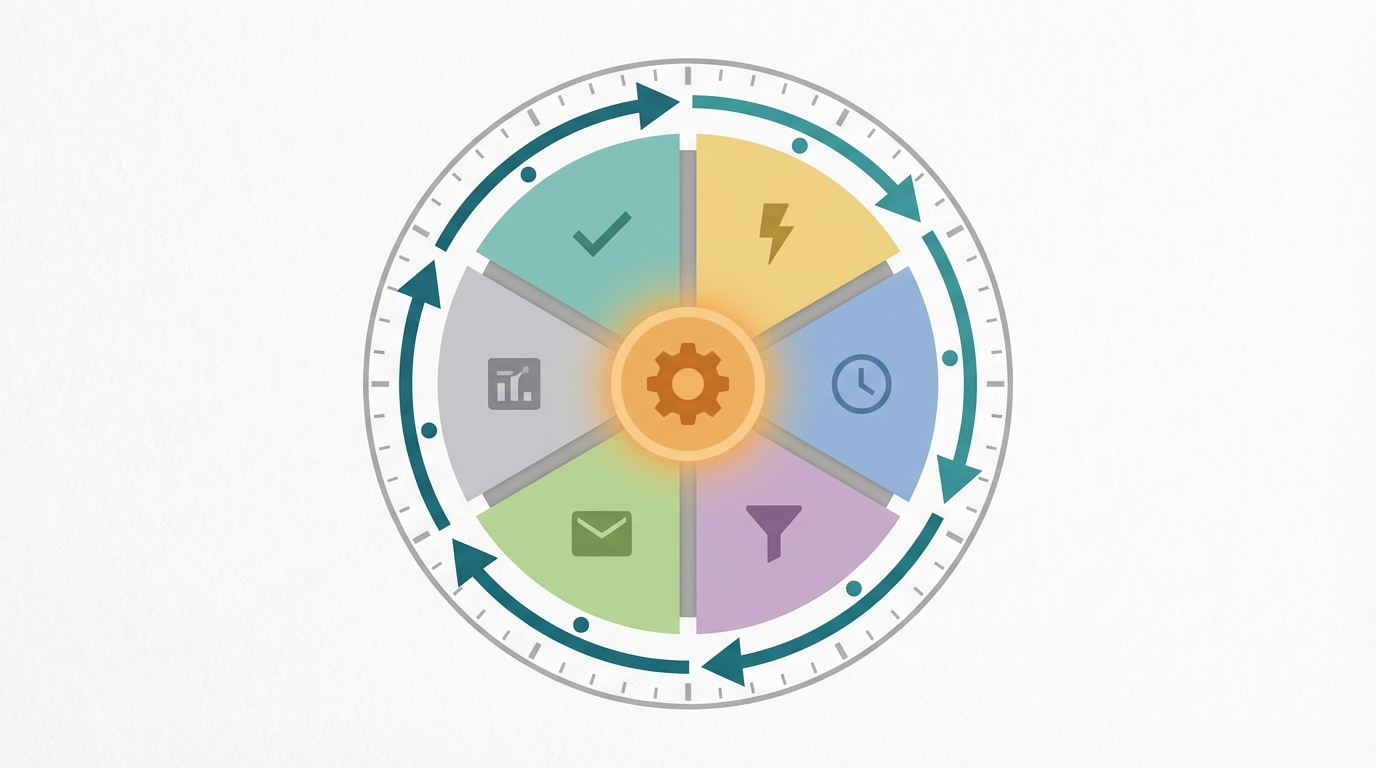 Returns automation eliminates manual handling across 6 core process steps, reducing per-return processing time from 13–26 minutes to under 90 seconds.