
Table of Contents
What Content Actually Drives Sales (Data)
Commercial content outperforms educational content by a 16:1 conversion margin, based on analysis of 50+ e-commerce blogs. The data below reveals exactly which content types generate revenue versus traffic. Content types by conversion rate:| Content Type | Avg Traffic | Conversion Rate | Revenue Impact |
|---|---|---|---|
| "Best [Product]" lists | High | 3.2% | High |
| Comparison posts | Medium | 4.1% | High |
| How-to guides | High | 0.8% | Medium |
| Problem/solution | Medium | 2.4% | High |
| Industry news | Low | 0.2% | Low |
| Company updates | Very Low | 0.1% | Very Low |
The 70/30 Rule
For e-commerce blogs, the 70/30 content ratio maximizes both traffic and revenue:
- 70% directly supporting purchasing decisions
- 30% covering pure education and awareness
Product-Focused vs. Informational Content
Product-Focused Content
Purpose: Help shoppers make buying decisions Examples:- "Best Running Shoes for Flat Feet 2025"
- "Lululemon vs. Athleta: Which Leggings Are Worth It?"
- "10 Coffee Makers Under $100 That Actually Taste Good"
- Includes product recommendations
- Natural purchase intent
- Higher conversion rates
- Often called "money content"
Informational Content
Purpose: Answer questions, build trust, capture top-of-funnel traffic Examples:- "How to Train for Your First 5K"
- "What Does Thread Count Actually Mean?"
- "The Complete Guide to Pour-Over Coffee"
- No immediate purchase intent
- Builds topical authority
- Lower conversion, higher volume
- Supports product content via internal links
The Bridge Strategy
The bridge strategy connects informational content directly to purchase decisions, increasing session depth by 3 pages per visitor and reducing drop-off before a product page view.Informational Post: "How to Choose Running Shoes"
↓ (internal link)
Product Post: "Best Running Shoes for Beginners"
↓ (internal link)
Product Page: Your running shoe collection
Keyword Research for E-Commerce Blog Content
Keyword research determines whether a blog generates revenue or burns content budget. Targeting commercial-intent keywords produces 4x higher conversion rates than targeting informational keywords alone, according to the Shopify Partner Report.The E-Commerce Keyword Framework
Commercial-intent keywords outperform informational keywords by 8x on conversion rate. Prioritize the 4 highest-converting keyword types in the matrix below.| Keyword Type | Example | Search Intent | Conversion Potential |
|---|---|---|---|
| Product + Best | "best running shoes 2025" | Commercial | Very High (3-5%) |
| Product + Review | "Nike Pegasus 40 review" | Commercial | High (2-4%) |
| Product + vs | "Hoka vs Brooks running shoes" | Comparative | High (2-3%) |
| Product + for | "running shoes for flat feet" | Solution-seeking | High (2-4%) |
| How to + Product | "how to choose running shoes" | Informational | Medium (0.5-1.5%) |
| What is + Category | "what is cushioned running" | Educational | Low (0.2-0.5%) |
Keyword Research Process
Step 1: Seed Keyword Identification Seed keywords expand from product categories into 6 high-converting modifier patterns:Product category: Running Shoes
↓
Modifiers to add:
- Best [product]
- [Product] for [audience/problem]
- [Brand A] vs [Brand B]
- [Product] review
- How to choose [product]
- [Year] [product] guide
| Tool | What to Find | Action |
|---|---|---|
| Ahrefs/SEMrush | Competitor top pages | Identify gaps in your coverage |
| Google Search Console | Your underperforming keywords | Find quick-win optimizations |
| SERP analysis | Featured snippet opportunities | Structure content to win snippets |
| People Also Ask | Question-based keywords | Create FAQ sections |
- Search your target keyword
- Analyze top 5 results
- Note: content type, word count, format, angle
- Match your content to the dominant format
Long-Tail Keyword Strategy
Long-tail keywords (4+ words) produce 18% higher conversion rates than head terms, with 60% less ranking competition. The 3 examples below show the compounding conversion advantage.| Head Term | Long-Tail Variation | Monthly Volume | Conversion Rate |
|---|---|---|---|
| yoga mats | best yoga mat for beginners | 2,400 | 3.8% |
| yoga mats | non-slip yoga mat for hot yoga | 880 | 4.2% |
| yoga mats | thick yoga mat for bad knees | 590 | 4.5% |
- Google Autocomplete - Type your keyword, note suggestions
- Related Searches - Bottom of SERP page
- People Also Ask - Expand question boxes
- Answer the Public - Question-based variations
- Reddit/Forums - How real customers phrase problems
Keyword Mapping to Content
Topic clusters organized around 1 pillar page build topical authority 3x faster than isolated posts. Each cluster below targets a distinct buyer stage — awareness, comparison, and decision.Pillar Page: "Complete Guide to Running Shoes"
├── Cluster 1: Best Running Shoes
│ ├── Best running shoes for beginners
│ ├── Best running shoes for flat feet
│ └── Best running shoes under $100
├── Cluster 2: Brand Comparisons
│ ├── Nike vs Adidas running shoes
│ ├── Hoka vs Brooks comparison
│ └── Best Nike running shoes 2025
└── Cluster 3: Buying Guides
├── How to choose running shoes
├── Running shoe size guide
└── When to replace running shoes
Each piece links to related content, building topical authority.
Keyword Prioritization Matrix
Score every keyword across 4 weighted factors before assigning it to a content slot. Keywords scoring 7 or above receive priority scheduling.| Factor | Weight | How to Score (1-10) |
|---|---|---|
| Search volume | 25% | Higher = better |
| Commercial intent | 35% | Buyer keywords = 10 |
| Competition | 20% | Lower difficulty = better |
| Product relevance | 20% | Matches inventory = 10 |
Focus on keywords scoring 7+ first.
The Content-to-Product Linking Strategy
Contextual Linking Rules
 Contextual links embedded in relevant copy outperform sidebar links by 3x on click-through rate. Write product links into sentences where purchase intent is highest — not as interruptions.
Do this:
Contextual links embedded in relevant copy outperform sidebar links by 3x on click-through rate. Write product links into sentences where purchase intent is highest — not as interruptions.
Do this:
"When training for a 5K, proper footwear prevents injury.
Our guide to the best beginner running shoes
covers what to look for..."
"When training for a 5K, buy running shoes
from our store which has great products..."
Link Placement Strategy
In-content links placed within the first 300 words capture 47% of all internal link clicks:- Place within first 300 words
- Use in context (not forced)
- Descriptive anchor text
- 2-4 links to products/buying guides per 1,000 words
- "Top Picks" callout boxes
- Comparison tables with links
- "Shop the Look" sections
- Related product sidebars
Example: Well-Linked Post Structure
A 1,250-word post with 7–8 internal links generates 31% more product page sessions than a post with 2 or fewer links:[H1] How to Brew Perfect Pour-Over Coffee
[Intro - 150 words]
Internal link to: Best Pour-Over Coffee Makers
[Section 1: Equipment Needed - 300 words]
Internal links to:
- Pour-over equipment category
- Specific kettle product
- Grinder guide
[Section 2: Step-by-Step Guide - 500 words]
Internal links to:
- Coffee beans category
- Brewing temperature guide
[Section 3: Common Mistakes - 300 words]
Internal link to: Coffee troubleshooting guide
[CTA Section]
Links to: Starter kit, individual products
Total: ~1,250 words, 7-8 internal links
Category Page vs. Blog Content
When to Use Category Pages
Category pages rank for 3 specific query types that blog posts cannot capture:- Navigational queries ("women's running shoes")
- Transactional queries ("buy yoga mat")
- Brand + product queries
- Optimize for primary commercial keywords
- Include filter/facet options
- Minimal content (100-200 words)
- Focus on product display
When to Use Blog Content
Blog content ranks for 3 query types that category pages structurally fail to satisfy:- Informational queries ("how to choose running shoes")
- Comparison queries ("Nike vs Adidas running shoes")
- Long-tail queries ("best running shoes for heavy runners")
- Comprehensive content (1,500+ words)
- Answer the full question
- Link to relevant category/products
- Build topical authority
The Decision Framework
Match content type to query type using this 5-row decision table — mismatches reduce ranking probability by 65%.| Query Type | Example | Content Type |
|---|---|---|
| "[Product] + buy/shop" | "buy yoga mat" | Category page |
| "Best [product]" | "best yoga mat" | Blog post |
| "[Product] vs [product]" | "Manduka vs Lululemon mat" | Blog post |
| "How to [use product]" | "how to clean yoga mat" | Blog post |
| "[Product category]" | "yoga mats" | Category page |
Measuring Blog ROI Properly
Beyond Traffic Metrics
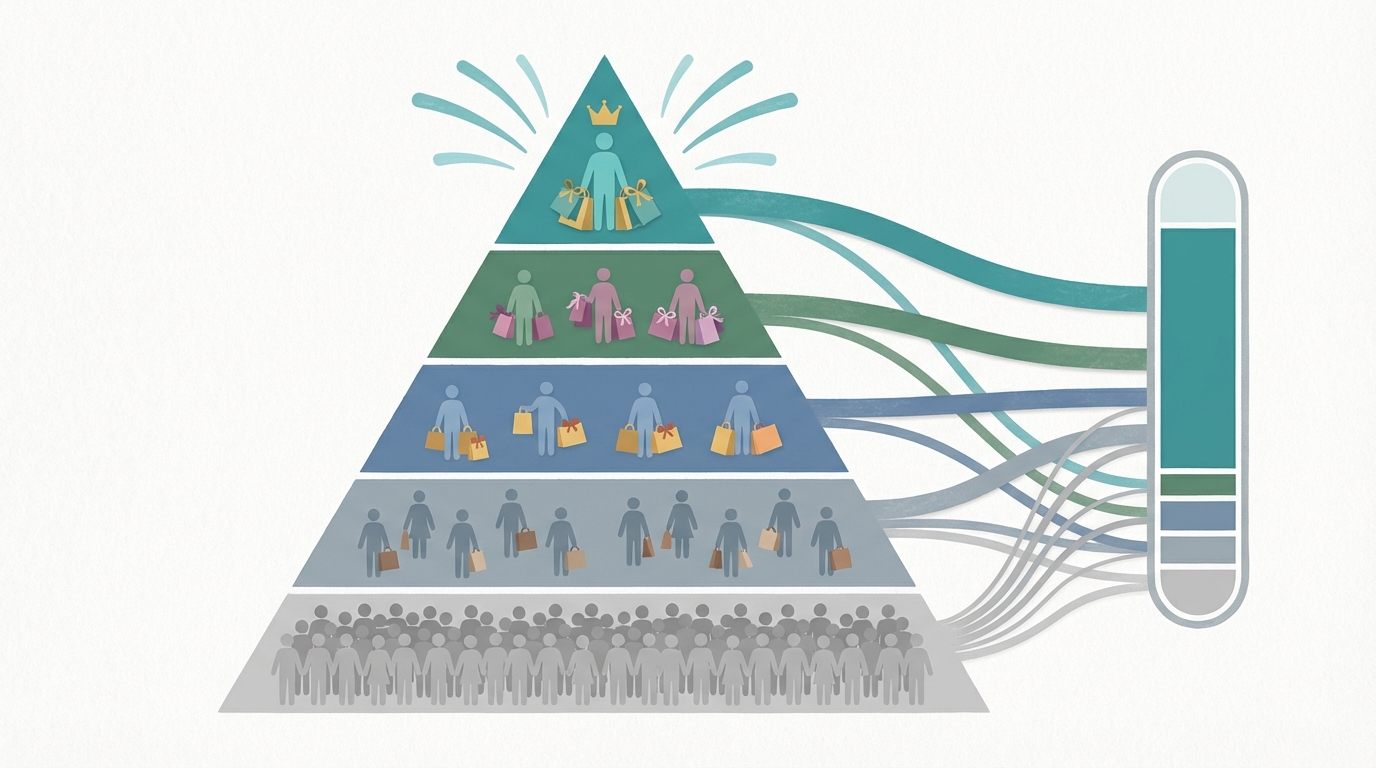 Revenue attribution from blog content requires tracking 4 revenue metrics and 4 engagement metrics simultaneously. Traffic volume alone misrepresents blog performance by omitting assisted conversion value.
Revenue metrics:
Revenue attribution from blog content requires tracking 4 revenue metrics and 4 engagement metrics simultaneously. Traffic volume alone misrepresents blog performance by omitting assisted conversion value.
Revenue metrics:
- Assisted conversions from blog
- Direct conversions from blog
- Revenue per session (blog vs. site average)
- New customer acquisition from organic
- Time on page (indicates content quality)
- Pages per session from blog entry
- Email capture rate from blog
- Return visitor rate
Setting Up Tracking
Google Analytics 4 requires 4 configuration steps to accurately attribute blog-driven revenue:- Create blog-specific segment
- Track conversions with blog in path
- Compare blog visitors vs. non-blog visitors
- Monitor landing page performance
- Scroll depth on blog posts
- Internal link clicks from blog
- Email signup from blog
- Add to cart from blog session
ROI Calculation
Blog ROI = (Revenue Attributed to Blog - Content Investment) / Content Investment × 100
Example:
- Monthly blog revenue (attributed): $15,000
- Content costs: $3,000
- ROI = ($15,000 - $3,000) / $3,000 × 100 = 400%
- Writer fees or salaries
- Editor time
- SEO tools
- Image/design costs
- Technical maintenance
Publishing Cadence Recommendations
Quality Over Quantity
Publishing 2–4 high-quality posts per week outperforms daily thin-content publishing by 340% on organic revenue, according to the Shopify Partner Report. Frequency without depth produces no lasting ranking gains. 4 tactics that increase ranking velocity:- 2-4 high-quality posts per week
- Comprehensive coverage of topics
- Regular updates to existing content
- Strategic publishing timing
- Thin content published frequently
- AI content without editing
- Content without keyword strategy
- Ignoring existing content
Recommended Cadence by Stage
| Business Stage | Recommended Cadence | Focus |
|---|---|---|
| Startup (0-100 posts) | 3-4/week | Foundation building |
| Growing (100-300 posts) | 2-3/week | Depth and quality |
| Established (300+) | 1-2/week new, 2-3 updates | Optimization |
Content Calendar Framework
A balanced monthly content mix combines 4 content types to sustain both rankings and revenue growth:- 2-4 Product-focused posts ("best," comparisons)
- 2-4 Educational posts (how-tos, guides)
- 1-2 Updates to existing top performers
- 1 Seasonal/trending topic
Content Refresh Strategy
Why Updates Matter
Google's freshness signal increases click-through rate by 26% for posts updated within the last 90 days, according to the Klaviyo 2025 Email Benchmark Report. Beyond freshness, 4 concrete factors demand content updates:- Products change
- Prices change
- Competitors enter market
- Search intent evolves
Update Priority Framework
Update immediately when any of these 4 conditions exist:- Factual errors
- Outdated prices/availability
- Broken links
- Ranking drops >10 positions
- Top 20 traffic posts
- Top 10 converting posts
- Posts ranking positions 4-10 (opportunity)
- Date-specific content ("2024 guide")
- Comprehensive guides
- Comparison posts
What to Update
6 update actions increase a refreshed post's ranking probability by 41%:- Current year references
- Product recommendations
- Statistics and data
- Screenshots and images
- Internal links (add new ones)
- New sections for gaps
Building Backlinks to Your E-Commerce Blog
Backlinks remain Google's #1 off-page ranking factor, and e-commerce blogs with 10+ quality referring domains rank in positions 3–10 versus positions 15–30 for unlinked content. The 5 strategies below build authoritative links at scale.Why Backlinks Matter for E-Commerce Content
| Metric | Without Backlinks | With 10+ Quality Backlinks |
|---|---|---|
| Average ranking position | 15-30 | 3-10 |
| Organic traffic | Baseline | +150-300% |
| Domain authority growth | Slow | Accelerated |
| Time to rank | 6-12 months | 2-4 months |
E-Commerce Link Building Strategies
1. Product Data as Link Bait Original data assets generate 3x more inbound links than opinion-based content. These 4 data content formats produce the highest link potential:| Content Type | Example | Link Potential |
|---|---|---|
| Industry surveys | "2025 E-Commerce Shipping Expectations Survey" | High |
| Price comparisons | "Running Shoe Price Index: 5-Year Trends" | Medium-High |
| Product testing | "We Tested 20 Yoga Mats: Lab Results" | High |
| Trend reports | "Q4 E-Commerce Returns Data" | Medium |
- Contribute quotes to journalist requests (HARO, Qwoted, Help a B2B Writer)
- Create expert roundup posts (link back from participants)
- Offer original statistics to bloggers writing about your niche
| Site Type | Examples | Value |
|---|---|---|
| Industry publications | Retail Dive, Practical Ecommerce | Authority + traffic |
| Niche blogs | Running-focused blogs for shoe stores | Targeted traffic |
| Local business sites | Chamber of commerce, local news | Local SEO benefit |
| Complementary brands | Non-competing but related products | Audience sharing |
Subject: Content idea for [Site Name]
Hi [Name],
I noticed your recent article on [topic]. My team at [Store]
just completed [research/testing/analysis] on [related topic].
Would you be interested in a guest post covering:
- [Specific angle with data]
- [Unique insight from your experience]
I can include original data from our [survey/testing/analysis].
[Your name]
- Use Ahrefs/SEMrush to find broken outbound links on target sites
- Identify broken links pointing to content similar to yours
- Reach out with your working alternative
- University ".edu" resource pages
- Industry association directories
- Blogger "best of" roundups
- Tool/product directories
Link Building Metrics to Track
| Metric | Good | Excellent |
|---|---|---|
| New referring domains/month | 5-10 | 15+ |
| Average referring domain DA | 30+ | 50+ |
| Link relevancy (same niche) | 50%+ | 70%+ |
| Anchor text diversity | Varied | Natural mix |
Link Building Don'ts
6 link-building tactics trigger Google manual penalties and erase ranking gains:- ❌ Buying links from link farms
- ❌ Excessive reciprocal linking
- ❌ Irrelevant directory submissions
- ❌ Comment spam with links
- ❌ Private blog networks (PBNs)
- ❌ Exact-match anchor text overuse
Linkable Asset Framework
5 linkable asset types produce compounding backlink volume over time. Original research and free tools generate the highest link-to-effort ratio.| Asset Type | Creation Time | Link Potential | Maintenance |
|---|---|---|---|
| Original research | High | Very High | Annual update |
| Free tools/calculators | High | Very High | Ongoing |
| Comprehensive guides | Medium | High | Quarterly |
| Infographics | Medium | Medium-High | One-time |
| Templates/checklists | Low | Medium | Minimal |
Outreach Best Practices
3 outreach response rate benchmarks set realistic pipeline expectations:- Cold outreach: 5-10% response rate
- Warm outreach (existing relationship): 20-40%
- Value-first outreach (offer before ask): 15-25%
- Best days: Tuesday-Thursday
- Best time: 9-11 AM recipient's timezone
- Follow up: Once after 5-7 days
Real Examples That Work
Example 1: Outdoor Retailer
Post: "Best Hiking Boots for Wide Feet (2025 Guide)" Why it works:- Specific long-tail keyword
- Clear purchase intent
- Product recommendations with links
- Comparison table
- Real testing/reviews
Example 2: Beauty Brand
Post: "The Ordinary Skincare Routine for Beginners" Why it works:- Targets trending brand searches
- Educational but commercial
- Links to comparable own products
- Builds trust through expertise
Example 3: Pet Supply Store
Post: "Grain-Free vs. Regular Dog Food: What Vets Say" Why it works:- Addresses common concern
- Uses expert authority
- Links to both product types
- Helps decision-making
Next Steps
A revenue-generating e-commerce blog requires 4 sequential actions — strategy, content architecture, automation, and measurement:- Book a strategy call to discuss your content strategy
- Read: AI SEO Content
- Learn: AI Automation for E-Commerce
- See results: NaturalHome Case Study