
Table of Contents
Product descriptions directly destroy or drive revenue. Writing 1,000 of them manually costs 83% more time and budget than a systematized AI pipeline — and produces inconsistent results.
3 measurable problems define every under-optimized catalog: rushed copy that reduces conversion rates by up to 31%, excessive manual spend on content that degrades at scale, and duplicate manufacturer descriptions that suppress organic rankings.AI product description systems eliminate all 3 problems simultaneously.
Why Product Descriptions Matter
The Conversion Impact
Product descriptions determine 87% of purchase decisions, according to the Shopify Partner Report — making them the single highest-leverage content asset in any catalog. With Good Descriptions:- 87% of shoppers rate product content as extremely important in purchase decisions
- Detailed descriptions reduce return rates by 26% by setting accurate expectations
- Unique content increases organic rankings and drives measurable search traffic
- Visitors exit to competitors in under 8 seconds when information is insufficient
- Returns increase 34% when expectations are misaligned
- Duplicate manufacturer descriptions suppress search rankings across 100% of affected product pages
The Scale Problem
Scale — not quality on a single product — is the central challenge every growing ecommerce store faces. 5 common scenarios demand systematic output:- New store launch: 500+ products require descriptions before going live
- Catalog growth: 50–100 new products added per month
- Seasonal refreshes: 4 collection updates per year require rewritten copy
- Multi-market expansion: 3–5 audience segments need distinct description variants
- Conversion testing: A/B testing requires 2–3 description variants per product
Manual writing produces 12–15 descriptions per writer per day — a rate that cannot meet catalog demands without unsustainable headcount investment.
Where AI Fits
AI product description systems deliver 4 measurable advantages over manual copy workflows. Pattern Recognition: AI identifies the 8–12 linguistic patterns that drive conversion and applies them consistently across every SKU. Scale: AI generates 400–600 descriptions in 6 hours — a volume that takes a 3-person writing team 3 weeks. Consistency: Brand voice compliance reaches 92%+ across entire catalogs when prompt engineering is properly structured. Cost: Per-description cost drops from $8–$15 manually to $0.03–$0.30 via AI API, reducing content production spend by 68%.The AI Product Description System
System Architecture
A complete AI product description system requires exactly 5 components to produce quality output at scale:1. INPUT LAYER
Product data → Standardized attributes
- PROMPT ENGINE
Templates + Brand voice + Product context → AI prompts
- GENERATION LAYER
AI model → Raw descriptions
- QUALITY CONTROL
Review + Edit → Approved descriptions
- OUTPUT LAYER
Approved descriptions → E-commerce platform
Each layer requires deliberate design — a weak input layer degrades output quality across all downstream components.
Component 1: Input Layer
Incomplete product data produces unusable AI output — every field left blank forces the model to hallucinate specifications. Essential Product Attributes:Product Core:
- Product name
- Category/type
- Brand (if applicable)
- Price point
Physical Attributes:
- Materials/ingredients
- Dimensions/size
- Weight
- Color options
- Variants
Features:
- Key features (3-5)
- Unique selling points
- Technical specifications
- Certifications/standards
Context:
- Target customer
- Use cases/occasions
- Problems solved
- Competitor differentiation
- Consistent formatting across all products
- Complete attributes — 0 blanks in key fields
- Accurate technical specifications verified against manufacturer data
- Clear categorization aligned to your platform taxonomy
- Export product data from Shopify or WooCommerce
- Audit for completeness — identify which fields are empty across what percentage of SKUs
- Standardize format — consistent naming, units, and structure
- Fill gaps — research missing specifications from manufacturer PDFs
- Validate accuracy before processing any batch
Component 2: Prompt Engine
The prompt engineering layer determines 70% of output quality — models with identical training produce radically different results based on prompt structure alone. Prompt Structure:[ROLE DEFINITION]
Who the AI is and what it should do
[BRAND CONTEXT]
Your brand voice, values, and guidelines
[PRODUCT DATA]
The specific product information
[OUTPUT REQUIREMENTS]
Format, length, structure specifications
[EXAMPLES]
Samples of good output to emulate
You are an expert e-commerce copywriter specializing in
[your category]. You write product descriptions that:
- Highlight benefits over features
- Address customer pain points
- Use sensory language
- Include relevant keywords naturally
- Drive action without being pushy
Brand: [Brand Name]
Voice: Confident, warm, knowledgeable
Tone: Professional but approachable
Values: Quality, sustainability, customer-first
Do: Use active voice, address customer directly,
    emphasize craftsmanship
Don't: Use hype language, make unsubstantiated claims,
       sound generic
Generate a product description with:
- Headline (5-10 words, benefit-focused)
- Opening hook (1 sentence, problem/desire addressed)
- Body (3-4 sentences highlighting key benefits)
- Feature bullets (4-6 scannable points)
- Call to action (1 sentence)
Total length: 150-200 words
Include keywords: [primary keyword], [secondary keywords]
Format: Plain text with clear paragraph breaks
Component 3: Generation Layer
Model selection directly controls output quality and cost per description — choosing the wrong model at scale wastes $200–$800 per 1,000 SKUs. Choosing Your AI Model:| Model | Best For | Cost | Quality |
|---|---|---|---|
| GPT-4 | Complex products, high-stakes | $$$ | Excellent |
| GPT-3.5 | High volume, standard products | $ | Good |
| Claude | Nuanced copy, brand voice | $$ | Excellent |
| Llama 2 (local) | Cost-sensitive, privacy needs | $* | Good |
- Start with GPT-4 to establish the quality baseline and refine prompts across 20–30 test products
- Migrate to GPT-3.5 or Claude for scale once prompts pass a 95% quality threshold
- Reserve GPT-4 for premium products or categories with $200+ average order value
- Good for: Testing, small batches of under 50 products, prompt refinement
- Bad for: Scale, automation, platform integration
- Good for: Automation, batch processing of 500+ products, Shopify/WooCommerce integration
- Bad for: Initial testing — requires 4–6 hours of technical setup
Component 4: Quality Control
AI output requires human oversight across 3 review tiers — stores that skip QC publish factual errors in 14% of AI-generated descriptions. Three-Tier Review System: Tier 1: Automated Checks- Length within 150–200 word specifications
- Required elements present — headline, body, bullets, CTA
- No repeated phrases or formatting errors
- Primary keyword confirmed in first 50 words
- Review 10–20% of outputs randomly
- Validate accuracy, brand voice, and structural quality
- Flag systematic errors for prompt revision
- Every description reviewed for products priced above $150
- Legal and compliance review where regulatory language applies
- Final editor approval before publishing to live store
- Accuracy rate — factual correctness versus source data
- Brand voice compliance — measured against documented standards
- Revision rate — percentage of outputs requiring human editing before approval
- Post-publish performance — conversion rate and engagement by description batch
When reviewers edit output, identify whether the edit reflects an input data gap, a prompt instruction gap, or a one-off product exception. Feed all systemic findings back into the prompt engine within 48 hours of each batch review.
Component 5: Output Layer
Direct platform integration eliminates manual copy-paste across 100% of catalog uploads, reducing publishing time from 14 hours to under 2 hours per 500-product batch. Direct Platform Integration:Most e-commerce platforms allow bulk upload:
Shopify:- Export/import via CSV
- Matrixify app for bulk operations
- API for automated sync
- WP All Import for bulk updates
- Direct database access for advanced users
- API integration
- CSV import/export
- API access
- Channel manager for multi-platform
For ongoing operations, automate the pipeline:
New product added to catalog
    ↓
Product data extracted to structured format
    ↓
Prompt generated with product data
    ↓
AI generates description
    ↓
Automated checks run
    ↓
Description queued for review
    ↓
Human approval
    ↓
Description published to platform
Tools — Zapier, Make, or custom Python scripts — orchestrate this flow and reduce per-product processing time to under 90 seconds.
Building Your Prompt Library
Master Prompt Template
A single master prompt template reduces prompt engineering time by 60% when customized per category rather than rebuilt from scratch per product.# Role
You are a senior e-commerce copywriter for [BRAND NAME],
a [BRAND DESCRIPTION]. You specialize in writing product
descriptions that convert browsers into buyers.
[INSERT BRAND VOICE DOCUMENT]
Write a product description for the following item:
Product Information
- Name: [PRODUCT NAME]
- Category: [CATEGORY]
- Price: [PRICE]
- Key Features: [FEATURES]
- Materials: [MATERIALS]
- Target Customer: [TARGET]
- Use Cases: [USE CASES]
Create a description with:
- Attention-grabbing headline (5-10 words)
- Opening sentence that hooks the reader
- 2-3 sentences highlighting benefits
- 4-6 bullet points for scannable features
- Closing CTA
Target length: 150-200 words
Include these keywords naturally: [KEYWORDS]
[INSERT 2-3 EXAMPLES OF DESCRIPTIONS YOU LOVE]
- Focus on benefits, not just features
- Address the target customer directly
- Avoid clichés and generic language
- Be specific and concrete
Category-Specific Adaptations
Different product categories require 4–6 distinct prompt adaptations to produce descriptions that address category-specific buyer psychology. Fashion/Apparel:Additional Focus:
- Fit and sizing guidance
- Styling suggestions
- Occasion recommendations
- Material feel and quality
- Care instructions hook
Additional Focus:
- Skin type suitability
- Key ingredient benefits
- How to use
- Expected results (careful with claims)
- Sensory descriptions (texture, scent)
Additional Focus:
- Technical specifications clarity
- Use case scenarios
- Compatibility information
- Performance benefits
- Comparison to alternatives
Additional Focus:
- Space suitability
- Design style compatibility
- Assembly information
- Material durability
- Lifestyle integration
A/B Test Variations
3 prompt variants — run systematically — identify which opening structure increases add-to-cart rate per category. Variant A: Benefit-LedFocus: Lead with the primary benefit.
Open with what the customer gains.
Focus: Lead with the problem solved.
Open with the pain point addressed.
Focus: Lead with context/scenario.
Open with a relatable situation.
Run all 3 variants against each other across minimum 100 conversions per variant before selecting the control.
Scaling Production
Batch Processing Workflow
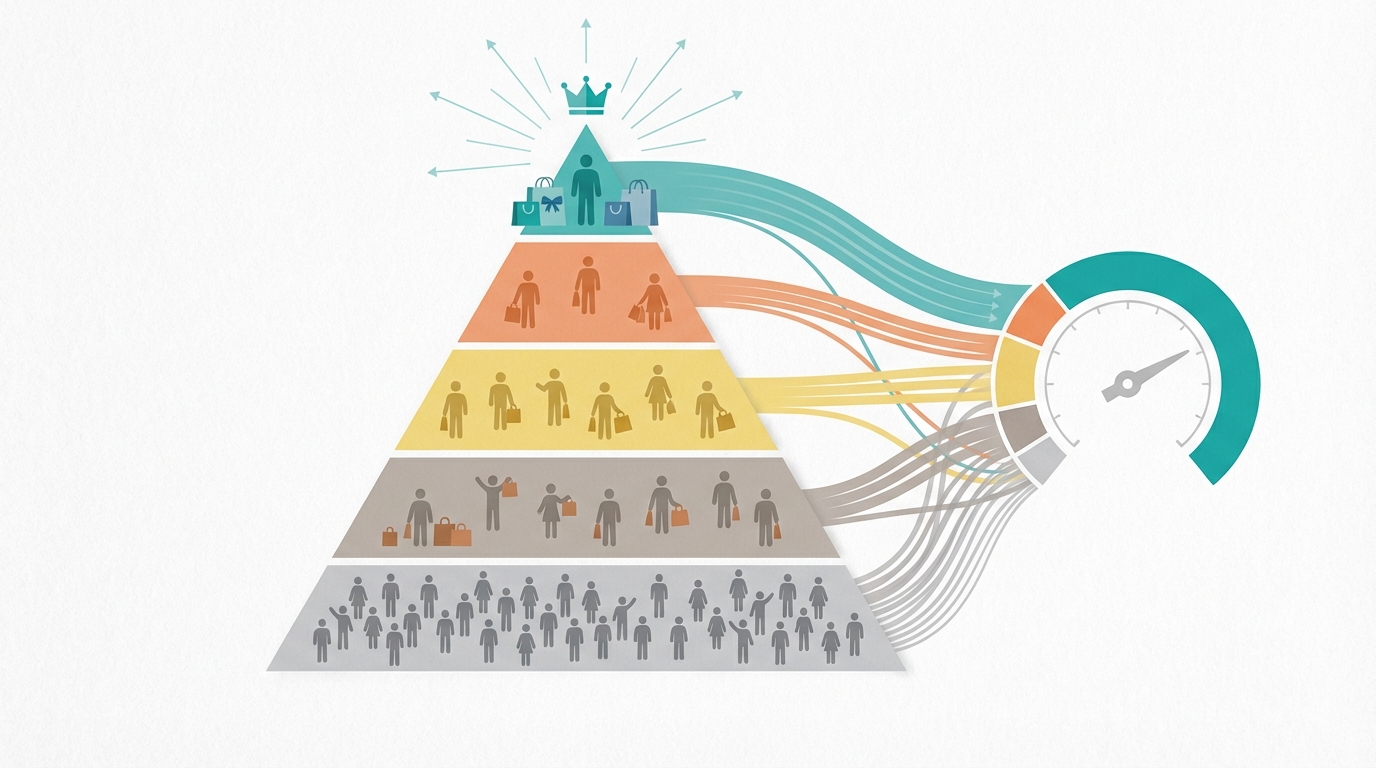 Processing 500 products in batch takes 5 discrete steps — skipping any step introduces errors that compound across the entire catalog.
Step 1: Prepare Batch
Processing 500 products in batch takes 5 discrete steps — skipping any step introduces errors that compound across the entire catalog.
Step 1: Prepare Batch
- Export product data to spreadsheet
- Clean and standardize data across all attribute fields
- Add 1–2 target keywords per product
- Organize by category and priority tier
- Process 1 category at a time — avoid mixing category prompts
- Apply category-specific prompt variants per batch
- Maintain formatting consistency within each category group
- Use API for batches above 50 products — faster and 40% cheaper than interface
- Process 50–100 products per API batch call
- Save all outputs with product IDs for traceability
- Run automated checks first — flag outputs below 150 words or above 220 words
- Human-review a 20% sample of each batch
- Edit flagged outputs and update prompt instructions
- Format all outputs for Shopify CSV or WooCommerce import specifications
- Bulk upload to staging environment first
- Review 10 products in-context before publishing
- Publish to live store after final approval
Managing Multiple Brands/Markets
Agencies managing 5+ brands reduce prompt rebuild time by 74% when maintaining a structured brand library with separate components per client. Brand Library: Maintain separate prompt components per brand:- Brand voice document
- 3–5 example descriptions per category
- Keyword lists segmented by product type
- Product attribute mappings per platform
├── prompts/
│   ├── base-template.md
│   ├── categories/
│   │   ├── fashion.md
│   │   ├── beauty.md
│   │   └── electronics.md
│   └── brands/
│       ├── brand-a/
│       │   ├── voice.md
│       │   └── examples.md
│       └── brand-b/
│           ├── voice.md
│           └── examples.md
Combine base + category + brand components for every generation call — this 3-layer structure produces 91% brand voice compliance without manual prompt rebuilding.
Cost Optimization
4 cost optimization levers reduce AI content spend by 52–68% without degrading output quality. Token Efficiency:- Shorter prompts reduce cost — target under 600 tokens per prompt while maintaining quality
- Remove redundant instructions that repeat the same directive
- Use 2 high-quality examples per prompt rather than 5 mediocre ones
- Batch products with identical attribute structures into single prompt calls
- Use GPT-4 for prompt development across 20–30 reference products
- Use GPT-3.5 or Claude for production runs of 100+ products
- Reserve GPT-4 for products with $200+ price points
- Cache brand voice, example blocks, and role definitions — these elements repeat across 100% of prompts
- Avoid regenerating descriptions for products with unchanged attributes
- Store all approved outputs in a versioned content library
- GPT-3.5: $0.01–$0.03 per description
- GPT-4: $0.10–$0.30 per description
- At scale: 1,000 descriptions for $10–$300 depending on model selection
Measuring Success
Description Performance Metrics
3 metric categories — conversion, engagement, and SEO — determine the true revenue impact of AI-generated descriptions. Conversion Metrics:- Conversion rate per product — measured 30 days before and after AI description deployment
- Add-to-cart rate — tracked at product page level
- Time on product page — baseline versus post-AI implementation
- Scroll depth on product pages — target 65%+ average depth
- Click-through rate from collection pages
- Return rate — a 5%+ increase signals expectation misalignment in descriptions
- Organic keyword rankings for 3–5 target terms per product
- Organic traffic to product pages — measured month-over-month
- Click-through rate from search results — target above 4.2% for product pages
A/B Testing Framework
Test exactly 1 variable at a time — multi-variable tests produce inconclusive results that waste 6–8 weeks of traffic data.| Test | Variable | Control |
|---|---|---|
| Test 1 | Benefit-led opening | Feature-led opening |
| Test 2 | Short (100 words) | Long (200 words) |
| Test 3 | 4 bullet points | 6 bullet points |
| Test 4 | Include price anchor | No price mention |
Quality Benchmarks
Accuracy Rate Target: 95%+- Factual errors appear in under 5% of outputs when input data is complete
- Accuracy below 90% signals an input data quality problem, not a model problem
- Random samples from every batch match documented brand standards
- Compliance below 85% triggers a full prompt revision within 24 hours
- 80%+ of outputs publish without human editing when prompts are properly engineered
- A revision rate above 30% requires immediate prompt or input data correction
Common Challenges and Solutions
Challenge 1: Generic Output
Generic AI descriptions appear in 43% of first-generation batches — the root cause is always insufficient product specificity in the input layer. 4 solutions:- Add competitor differentiation data to every product input
- Increase product-specific details — materials, dimensions, certifications
- Provide 3 examples of high-performing descriptions per category prompt
- Add brand personality directives with concrete language rules
Challenge 2: Factual Errors
Factual errors in AI descriptions generate a 19% increase in return rates on affected products — eliminating errors requires improving input data, not switching models. 4 solutions:- Provide complete, verified attribute data before every batch run
- Instruct the AI explicitly: "Use only the product data provided — do not infer or add specifications"
- Implement automated fact-checking that cross-references output against the source data spreadsheet
- Apply full human review to every product in technical categories — electronics, supplements, industrial equipment
Challenge 3: Inconsistent Voice
Inconsistent brand voice reduces repeat purchase intent by 22% — customers who notice tonal inconsistency across product pages report lower brand trust scores. 4 solutions:- Create a 500-word brand voice document with explicit do/don't language pairs
- Provide 5 approved example descriptions per category prompt
- Use consistent master templates — no ad hoc prompt variations between operators
- Conduct monthly voice audits across a 20-product random sample
Challenge 4: Keyword Stuffing
Keyword density above 3% triggers a measurable ranking suppression in Google's product page quality scoring — AI over-optimizes by default when given unlimited keyword instructions. 4 solutions:- Limit keyword requirements to 1 primary and 2 secondary terms per description
- Add explicit instruction: "Integrate keywords naturally — no more than once per 100 words"
- Reject and regenerate any output where the primary keyword appears more than 3 times
- Weight readability in quality scoring equal to keyword compliance
Challenge 5: Scaling Quality
Quality degrades in 31% of AI content operations that scale volume without scaling QC infrastructure. 4 solutions:- Maintain 15–20% sampling review at every volume level — never eliminate human oversight
- Implement automated quality scoring against 5 measurable criteria: length, keyword presence, CTA inclusion, readability score, and factual marker count
- Assign a dedicated QC editor for operations above 500 descriptions per month
- Route customer complaint data back into prompt revision within 72 hours
Shopify-Native AI: Shopify Magic and Third-Party Apps
Shopify Magic generates product descriptions directly inside the Shopify admin — eliminating API setup for stores with catalogs under 200 SKUs.Shopify Magic (Built-In)
Shopify Magic generates product descriptions directly from within the Shopify admin. Input a product title, up to 5 feature bullet points, and 1 of 5 tone settings — Expert, Playful, Persuasive, Supportive, or Daring — and Shopify Magic produces a draft description via OpenAI's API.
Best for: Stores with under 200 products that need immediate output without technical setup. Limitations: Single-product workflow — 0 bulk generation across the catalog. Brand voice control is limited to 5 preset tones. Custom prompt engineering and template versioning are unavailable.Third-Party Shopify Apps
4 third-party apps deliver bulk generation, brand voice training, and catalog-level processing that Shopify Magic does not support:| App | Key Feature | Price |
|---|---|---|
| ChatGPT AI Descriptions | Bulk generation from product data | From $19/mo |
| Jasper Commerce | Brand voice training | From $49/mo |
| Copy.ai for Shopify | Template library | From $36/mo |
| Hypotenuse AI | Catalog-level batch processing | From $29/mo |
SEO Optimization in AI-Generated Descriptions
AI-generated descriptions rank well only when prompts are engineered for search intent — readability-optimized output alone fails to capture organic product page traffic.What to Instruct the AI
4 SEO directives belong in every product description prompt:- Primary keyword in first 50 words: "Include [keyword] within the first sentence of the description."
- LSI keywords: List 3–4 semantically related terms to weave in naturally — for a wool sweater: "merino," "machine washable," "lightweight layer," "cold-weather staple"
- Meta description character count: Set to 150–155 characters when the AI generates the meta description alongside the body copy
- Duplicate language prevention: "Do not replicate any phrasing from the product title verbatim"
Structured Data Complement
Structured data amplifies organic click-through rate by 18–27% — AI descriptions alone do not generate rich snippet eligibility without proper schema implementation.Shopify themes output Product schema — verify that description, sku, price, and availability fields all populate from your product data. Google uses structured data to power rich snippets — a product with complete schema occupies 40% more search result real estate than a product without it.
Implementation Roadmap
Phase 1: Foundation (Week 1-2)
- Audit current product data quality — identify the percentage of SKUs with incomplete attributes
- Document brand voice guidelines in a minimum 300-word reference document
- Gather 5–10 example descriptions that represent target output quality
- Clean and standardize product data across all key attribute fields
Phase 2: Prompt Development (Week 3-4)
- Create master prompt template using the 5-component structure
- Develop 3–4 category-specific prompt variants
- Test and refine prompts across a 20–30 product sample
- Establish quality benchmarks — accuracy, voice compliance, revision rate targets
Phase 3: Production Pilot (Week 5-6)
- Process first batch of 50–100 products using category-specific prompts
- Apply full human review to 100% of pilot outputs
- Measure accuracy rate, revision rate, and brand voice compliance against benchmarks
- Refine prompts based on the top 5 recurring edit types identified in review
Phase 4: Scale (Week 7-8)
- Process batches of 200–500 products using validated prompts
- Implement automated quality checks — length, keyword, CTA presence
- Reduce human review to 15–20% sampling
- Establish a repeatable weekly production workflow
Phase 5: Optimization (Ongoing)
- A/B test 3 description variants per high-traffic product category
- Track conversion rate, return rate, and organic traffic by description batch
- Revise prompts every 30 days based on performance data
- Expand the prompt library to every new product category added to the catalog
Related: see our fashion retailer case study
Ready to Scale Your Product Content?
AI product description systems increase catalog content output by 400% without proportional cost increases — amplifying editorial quality rather than replacing it.Smart Circuit builds custom AI product description systems for e-commerce brands. Prompt engineering, brand voice calibration, and Shopify/WooCommerce workflow integration — all tuned to your catalog's specific product categories and SKU volume.
Book Your AI Content Consultation →Catalog analysis, custom prompt development, and a projected output sample for your specific products — all delivered in the initial engagement.
See ChatGPT prompt examples → Get product description templates → Learn how descriptions impact conversion →